The best USB-C RAID enclosures make it easier to combine bare SATA drives into fast, flexible desktop storage without buying a complete prebuilt NAS. They can support mirrored backups, larger combined volumes, or independent disks for different workflows.
This roundup compares 10 USB-C RAID enclosures across two- to five-bay designs, hardware RAID support, transfer speeds, cooling, drive compatibility, and maximum capacity. Whether you need a compact backup enclosure or a higher-capacity media storage system, the right choice depends on your drives, computer ports, and preferred RAID setup.
Best 10 USB C Raid Enclosures Picks for 2026
Best All-Around DAS

- Four 3.5-inch bays with hardware RAID
- Supports RAID 0, 1, 5, JBOD, and single disks
- Works with Windows, macOS, and Linux
Best For: Flexible desktop storage and compatible QNAP NAS backup
Best for Media Workflows

- Two SATA bays with RAID 0, 1, JBOD, or single mode
- Built-in CFast 2.0 and SD UHS-II readers
- USB-C connectivity up to 1000MB/s
Best For: Creators managing camera cards and SATA drives
Best Five-Bay Capacity
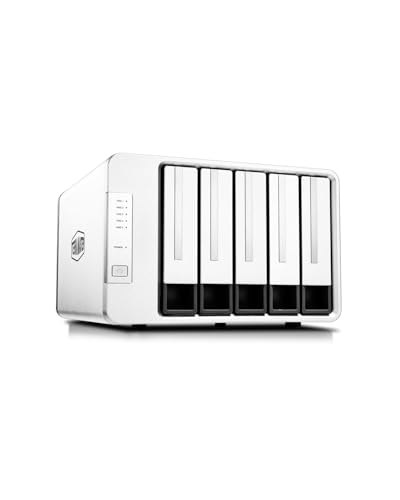
- Five bays with hardware RAID 5, 0, 1, 10, and Single
- Supports up to 120TB across compatible drives
- Works with Windows, macOS, and Linux
Best For: Large direct-attached storage and RAID 5 setups
Best for 10Gbps Performance
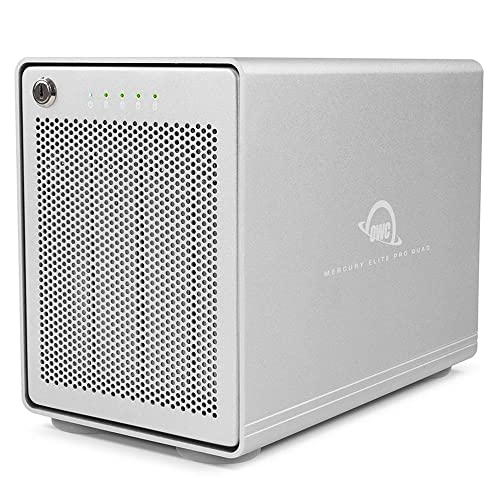
- Four bays support 2.5-inch and 3.5-inch SATA drives
- USB 3.2 10Gbps interface with up to 947MB/s performance
- Supports software RAID but does not include SOFTRAID
Best For: Fast USB-C desktop storage for Mac and Windows users
Best Two-Bay RAID Value
TERRAMASTER D2-320 USB RAID Enclosure

- Hardware RAID 0, 1, JBOD, and Single modes
- Up to 44TB across two SATA drives
- Tool-free trays with temperature-controlled cooling
Best For: Compact mirrored storage and two-drive RAID setups
Highest Capacity
Yottamaster 5-Bay USB-C RAID Enclosure

- Five bays support up to 110TB
- RAID 0/1/3/5/10, JBOD, and Clone modes
- Aluminum shell with intelligent 80mm cooling fan
Best For: Large direct-attached storage and flexible RAID layouts
Best Compact 2-Bay Pick

- Two 3.5-inch SATA drive bays
- USB-C hub and Thunderbolt compatibility
- Tray-less design with aluminum cooling
Best For: Compact desktop and laptop storage setups
Best High-Capacity Choice

- Five bays for 2.5- and 3.5-inch drives
- Eight RAID and storage modes
- Up to 160TB with smart cooling
Best For: Large-capacity external storage and backup
Best Fast Dual-Bay Option

- 10Gbps USB 3.1 Gen 2 Type-C
- Four RAID and storage modes
- Supports 2.5- and 3.5-inch SATA drives
Best For: Flexible two-drive setups prioritizing USB-C speed
Best All-Around DAS – QNAP TR-004
QNAP TR-004 4 Bay USB Type-C Direct Attached Storage (DAS) with hardware RAID (Diskless)
Check Price On AmazonThe QNAP TR-004 is a practical choice for shoppers comparing usb c raid enclosures for desktop storage, NAS backup, or capacity expansion. Its four 3.5-inch bays and hardware RAID support cover RAID 0, 1, 5, JBOD, and individual-disk modes.
Best For: Home users and small businesses needing flexible four-drive direct-attached storage or QNAP NAS backup.
Pros:
- Hardware RAID supports RAID 0, 1, 5, JBOD, and individual disks.
- Works with Windows, macOS, and Linux over USB Type-C.
- Lockable drive bays and a metal enclosure provide practical everyday durability.
- Can expand compatible QNAP NAS storage or serve as external backup storage.
Cons:
- Drives are not included.
- It has a 5Gbps data-transfer rate rather than a faster 10Gbps USB connection.
- QNAP NAS compatibility has specific model and QTS-version limitations.
The TR-004 offers a balanced mix of RAID flexibility, broad operating-system support, and NAS integration. Verify your QNAP model requirements before buying, especially if you plan to use it as a NAS expansion device.
Best for Media Workflows – SABRENT DS-2BCR
The SABRENT DS-2BCR stands out among usb c raid enclosures by combining two SATA drive bays with built-in CFast and SD card readers. It supports RAID 0, RAID 1, JBOD, and single-disk operation while connecting through USB Type-C at up to 1000MB/s.
Best For: Photographers, video creators, and users who need drive RAID plus convenient CFast, SD, and USB-A connectivity.
Pros:
- Supports 2.5-inch and 3.5-inch SATA drives in RAID or single mode.
- Built-in CFast 2.0 and SD UHS-II readers support fast card transfers.
- USB Type-C interface offers transfer speeds up to 1000MB/s.
- Cooling fan and locking key help with sustained operation and drive security.
Cons:
- Only two drive bays are available.
- It does not list RAID 5 or RAID 10 support.
- The enclosure uses an ABS body rather than metal.
This dock is more specialized than a conventional multi-bay enclosure, but its card readers and front USB-A port make it useful for content-production setups. Choose it when fast removable-media access matters as much as drive redundancy.
Best Five-Bay Capacity – TerraMaster D5-310
The TerraMaster D5-310 is a high-capacity option for shoppers seeking usb c raid enclosures with five bays. Its dedicated hardware RAID control supports RAID 5, 0, 1, 10, and Single modes, while the diskless enclosure accepts 2.5-inch and 3.5-inch SATA drives.
Best For: Users who need up to five drives, RAID 5 flexibility, and large direct-attached storage for Windows, macOS, or Linux.
Pros:
- Five bays can support up to 120TB according to the supplied specifications.
- Hardware RAID supports RAID 5, 0, 1, 10, and individual disks.
- Compatible with Windows, macOS, and Linux without additional drivers.
- Includes temperature-controlled fans, drive sleep, power-on recovery, and Windows backup software.
Cons:
- Drives are not included.
- The USB 3.1 Gen 1 connection is rated at 5Gbps.
- Its larger five-bay design takes more desk space than smaller enclosures.
The D5-310 is a strong fit when expansion room and RAID 5 are priorities. Its five-bay layout and backup-focused features make it more suitable for sizable storage projects than minimal desktop setups.
Best for 10Gbps Performance – OWC Mercury Elite Pro Quad
The OWC Mercury Elite Pro Quad is designed for shoppers comparing usb c raid enclosures around four-drive capacity and faster USB-C performance. It provides four universal bays for 2.5-inch or 3.5-inch SATA drives and delivers USB 3.2 bandwidth at up to 10Gbps.
Best For: Mac or Windows desktop users who want a four-drive enclosure with high-speed USB-C connectivity and software RAID support.
Pros:
- Four universal bays accept both 2.5-inch and 3.5-inch SATA drives.
- USB 3.2 10Gbps connectivity supports performance up to 947MB/s in the supplied notes.
- Works with USB-C and Thunderbolt 3-equipped Mac or Windows computers.
- Supports software RAID configurations.
Cons:
- Drives are not included.
- SOFTRAID software is not included.
- The supplied information does not specify built-in hardware RAID modes.
The Mercury Elite Pro Quad is a compelling choice for users prioritizing interface speed and flexible drive sizes. Remember to budget for separate software RAID tools if you need RAID management, since SOFTRAID is not included.
Most Versatile – WAVLINK 4-Bay USB-C RAID Enclosure
If you need flexible expansion, this WAVLINK enclosure is a strong option among USB C RAID enclosures. It offers four SATA bays for 3.5-inch or 2.5-inch drives, 10Gbps USB-C connectivity, independent bay power switches, and HDMI output for compatible USB-C hosts.
Best For: Users building a high-capacity desktop storage setup with mixed-size SATA drives, fast file transfers, and extra display connectivity.
Pros:
- Four bays support up to 88TB using four 22TB drives.
- 10Gbps USB-C connectivity supports high-speed transfers.
- Aluminum construction and temperature-controlled fans help manage heat.
- Independent power switches allow convenient drive control and swapping.
Cons:
- 2.5-inch drives require separate mounting brackets.
- HDMI output requires a host USB-C port that supports video output and a USB-C-to-C cable.
- The supplied notes do not specify selectable RAID modes.
This model stands out for connectivity and bay flexibility rather than clearly documented RAID configuration. It is a practical choice when you want expanded SATA storage alongside HDMI and additional USB-C functionality.
Best Two-Bay RAID Value – TERRAMASTER D2-320 USB RAID Enclosure
The TERRAMASTER D2-320 is a focused two-drive option for shoppers comparing USB C RAID enclosures. Its hardware RAID supports RAID 0, RAID 1, JBOD, and Single modes, while USB 3.2 Gen 2 provides up to 10Gbps connectivity for Windows, Mac, and Linux systems.
Best For: Home users and professionals who want a compact two-bay enclosure with straightforward hardware RAID choices and mirrored-data support.
Pros:
- Supports RAID 0, RAID 1, JBOD, and Single configurations.
- Up to 44TB capacity with two 22TB SATA drives.
- Tool-free trays make drive installation and replacement easier.
- Temperature-controlled, low-noise fan adjusts to drive heat.
Cons:
- It is a DAS enclosure, not a NAS.
- Only two drives are supported, limiting expansion compared with larger enclosures.
- It uses a plastic enclosure rather than aluminum.
For a two-drive setup, the D2-320 offers a useful balance of speed, RAID flexibility, and simple installation. RAID 1 is particularly relevant for users who want mirrored backup, while RAID 0 favors performance and capacity.
Highest Capacity – Yottamaster 5-Bay USB-C RAID Enclosure
With five bays and support for up to 110TB, the Yottamaster PS500RC3 targets demanding storage users shopping for USB C RAID enclosures. It supports RAID 0, 1, 3, 5, 10, JBOD, and Clone modes, accepts 2.5-inch and 3.5-inch SATA drives, and connects over USB-C at up to 5Gbps.
Best For: Photographers, video editors, and businesses needing large direct-attached storage with multiple RAID and cloning options.
Pros:
- Five bays provide up to 110TB with five 22TB drives.
- Broad RAID support includes RAID 0, 1, 3, 5, 10, JBOD, and Clone.
- Aluminum construction and an intelligent 80mm fan support cooling.
- Removable trays accommodate both 2.5-inch and 3.5-inch SATA drives.
Cons:
- Its maximum transfer rate is 5Gbps, slower than the 10Gbps alternatives here.
- Total hard-drive power consumption must remain within the stated 78W limit.
- New drives may need formatting and partitioning before use.
The PS500RC3 is the capacity-focused pick, offering the most bays and the widest RAID selection in this group. Its slower 5Gbps interface is the main trade-off, so it makes the most sense when capacity and redundancy matter more than maximum USB transfer speed.
Best Compact 2-Bay Pick – Mobius 2C RAID Enclosure
The Oyen Digital Mobius 2C is a practical choice for shoppers comparing usb c raid enclosures for a compact two-drive setup. It supports two 3.5-inch SATA hard drives, uses tray-less insertion, and includes a USB-C hub for daisy-chaining or connecting additional devices.
Best For: Desktop or laptop users who want a portable two-bay enclosure with straightforward drive installation and USB-C connectivity.
Pros:
- Supports two 3.5-inch SATA hard drives.
- USB-C connectivity works with USB and Thunderbolt 3, 4, and 5 systems.
- Tray-less design simplifies drive insertion.
- Aluminum housing and a quiet fan help with heat dissipation.
Cons:
- Only accommodates two drives.
- Designed around 3.5-inch drives rather than native 2.5-inch support.
- Its listed data transfer rate is 10Gbps, so it is not the fastest option in this group.
The Mobius 2C balances simple installation, broad USB-C and Thunderbolt compatibility, and compact two-drive capacity. It is a sensible fit when you do not need a larger multi-bay enclosure.
Best High-Capacity Choice – UGREEN 5-Bay USB-C DAS
The UGREEN 5-Bay USB-C DAS is aimed at buyers who need more drive capacity from their usb c raid enclosures. It accepts up to five 2.5- or 3.5-inch SATA HDDs or SSDs, supports eight storage modes, and offers up to 160TB of total capacity.
Best For: Users building a high-capacity external storage system for Windows, macOS, Linux, or compatible NAS backup workflows.
Pros:
- Five bays support both 2.5- and 3.5-inch SATA drives.
- Eight modes include RAID 0, 1, 3, 5, and 10, plus independent, large, and clone modes.
- Supports up to 32TB per drive and 160TB total.
- Smart cooling adjusts fan speed using drive temperature data.
Cons:
- USB-C data transfer is limited to 5Gbps.
- Changing RAID modes requires reformatting, so backups are essential.
- Drives cannot be added to or managed as part of a NAS storage pool.
UGREEN’s enclosure stands out for expansion potential and RAID flexibility rather than top USB speed. Its five bays, automatic cooling, and clear drive-status LEDs make it a strong option for larger external storage projects.
Best Fast Dual-Bay Option – MAIWO USB-C RAID Enclosure
The MAIWO dual-bay enclosure is a versatile pick among usb c raid enclosures, pairing a USB 3.1 Gen 2 Type-C interface with support for two 2.5- or 3.5-inch SATA drives. It offers RAID 0, RAID 1, JBOD, and independent-drive modes, along with active cooling.
Best For: Users who want a compact dual-drive enclosure with 10Gbps USB-C connectivity and flexible RAID choices.
Pros:
- USB 3.1 Gen 2 Type-C interface supports up to 10Gbps.
- Supports RAID 0, RAID 1, JBOD, and independent-drive modes.
- Works with 2.5- and 3.5-inch SATA I, II, and III drives.
- Aluminum body, honeycomb vents, and a two-speed fan aid cooling.
Cons:
- A separate 2.5-to-3.5-inch mounting bracket is needed for 2.5-inch drives.
- Actual drive performance can be limited to 6Gbps under UASP by the drives themselves.
- Changing RAID modes requires backing up, initializing, and formatting as applicable.
MAIWO offers a useful combination of speed, drive-format flexibility, and RAID control in a relatively portable enclosure. It is particularly appealing when two bays are sufficient and faster USB-C transfer is a priority.
How We Picked the Best USB C Raid Enclosures
We focused on enclosures that accept standard 2.5-inch or 3.5-inch SATA HDDs and SSDs and connect to a host computer over USB-C. The selection includes two-, four-, and five-bay models to cover compact desktop backups, expanded media libraries, and higher-capacity storage arrays.
We compared advertised USB bandwidth, supported RAID modes, hardware versus software configuration, cooling features, drive capacity limits, included controls, and compatibility considerations. Because most models are diskless, the cost and condition of the drives you install remain important parts of the buying decision.
Quick Comparison
| What to Compare | Why It Matters |
|---|---|
| Number of bays | More bays provide greater capacity and more RAID configuration options. |
| USB speed | USB 3.2 and 10Gbps connections can reduce transfer times with suitable host ports and drives. |
| RAID modes | RAID 1 prioritizes redundancy, while RAID 0 emphasizes capacity and performance without drive failure protection. |
| Cooling | Fans and temperature control help maintain more consistent performance during long transfers. |
| Drive support | Check whether the enclosure supports your 2.5-inch SSDs, 3.5-inch HDDs, drive capacities, and formatting requirements. |
Key Buying Factors for USB-C RAID Enclosures
Choose the Right Bay Count
A two-bay enclosure is generally sufficient for a mirrored backup or a small high-speed workspace. Four- and five-bay USB-C RAID enclosures make more sense for large photo, video, archive, or project libraries, but they require more drives and desk space.
Match RAID to Your Priorities
RAID 1 mirrors data across two drives and is useful when continued access matters. RAID 0 combines drives for speed and capacity but offers no redundancy. Some larger enclosures support additional modes, including spanning or parity-based configurations. RAID is not a substitute for a separate backup.
Check the Complete Connection Path
A 10Gbps USB-C enclosure cannot deliver its advertised interface speed through a slower computer port, hub, cable, or drive. Confirm the host port standard and use a suitable cable. Mechanical hard drives may also become the performance bottleneck.
Plan for Heat, Noise, and Capacity
Five-bay systems can generate substantial heat when fully populated. Prefer active cooling or temperature-controlled fans for sustained workloads, and verify the supported capacity per bay before purchasing high-capacity disks.
Who Should Buy Which USB C Raid Enclosures?
- For compact mirrored backups: Choose a two-bay enclosure such as the TERRAMASTER D2-320, Oyen Digital Mobius 2C, or MAIWO dual-bay model.
- For balanced home and office storage: A four-bay option such as the QNAP TR-004, OWC Mercury Elite Pro Quad, or WAVLINK enclosure offers room to expand.
- For large media libraries: Consider a five-bay model from TERRAMASTER, Yottamaster, or UGREEN, especially if you need more capacity or multiple RAID modes.
- For occasional drive access: The SABRENT dual-drive dock is useful when flexible disk access and card-reader functions matter more than a permanently installed array.
Before ordering, confirm the enclosure’s RAID controls, operating-system support, included power supply, cable type, and warranty. Install matching drives when possible, label the array clearly, and maintain an independent backup of irreplaceable files.
