The right RAID enclosure can turn bare SATA drives or NVMe SSDs into a flexible backup system without requiring a full NAS. The models in this roundup cover compact two-bay designs, high-capacity four- and five-bay enclosures, and faster USB-C options.
Before choosing, consider the RAID levels you need, drive capacity, connection speed, cooling, and whether the enclosure supports hardware RAID or depends on host software. The buying guide below explains the main differences so you can match the enclosure to your backup workflow.
Best 10 Raid Enclosures for Backups Picks for 2026
Best Compact RAID Backup Pick

- Two-bay hardware RAID with RAID 1 mirroring
- USB 3.2 Gen 2 connectivity up to 10Gbps
- Supports up to 44TB total capacity
Best For: Compact mirrored backups for home and small-office systems
Best High-Capacity Expansion
ORICO 9848RU3 Four-Bay RAID Enclosure

- Eight RAID and storage configuration modes
- Up to 88TB across four 3.5-inch drives
- 150W power supply and 80mm cooling fan
Best For: Large desktop backup libraries and multi-drive storage expansion
Best Five-Bay RAID 5 Option
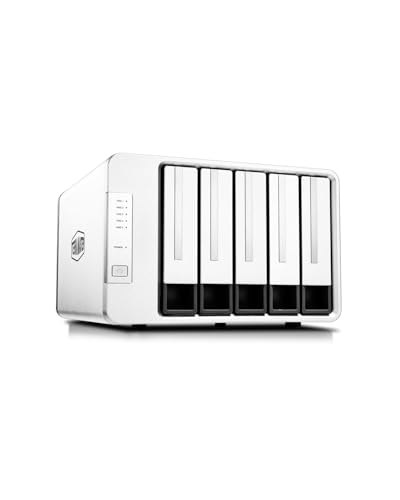
- Five-bay hardware RAID with RAID 5 and RAID 10
- Up to 120TB using five supported drives
- Includes Windows backup software
Best For: Large multi-platform backup systems needing RAID 5
Best Fast Professional Enclosure
ORICO 9948RC3-PRO 20Gbps RAID Enclosure

- USB 3.2 Gen 2x2 connectivity up to 20Gbps
- Four bays and up to 104TB capacity
- Supports RAID 5, RAID 10, and hot-swapping
Best For: Professional video, IT, and research backup workflows
Flexible Four-Bay Backup Storage

- Seven listed RAID, clone, and JBOD-style modes
- Up to 96TB across four 3.5-inch SATA drives
- USB-C up to 5Gbps with two switch-controlled fans
Best For: High-capacity 3.5-inch SATA backup storage
High-Capacity Five-Bay Workstation Storage

- Hardware RAID 0/1/3/5/10, JBOD, Clone, and Clear modes
- Supports five 2.5-inch or 3.5-inch SATA drives
- 150W built-in power supply and 80mm cooling fan
Best For: Large desktop backups and media libraries
Compact NVMe Backup and Cloning
NEWQ Dual-Bay RAID SSD Enclosure

- RAID 0/1, JBOD, and offline Clone modes
- Up to 20Gbps over USB 3.2
- Tool-free dual M.2 2280 NVMe design
Best For: Fast portable SSD backups and drive cloning
Versatile Four-Bay Backup Hub

- Four SATA bays with up to 80TB capacity
- Eight RAID, clone, large, and normal modes
- USB-A/USB-C 3.0 and eSATA connectivity
Best For: Flexible personal or small-business backup storage
High-Capacity Five-Bay Workhorse
Yottamaster FS5RU3 5-Bay RAID Enclosure
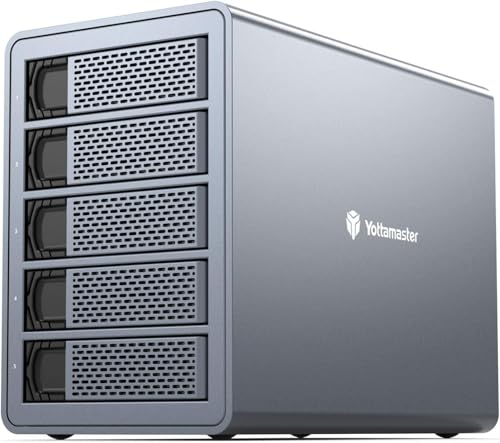
- Five bays support up to 120TB
- Hardware RAID 0/1/5/10, JBOD, and CLONE
- Removable trays, aluminum body, and 80mm fan
Best For: Large direct-attached media and archive backups
Split-Array Backup Station
CENMATE Dual 2-Bay RAID Enclosure
- Two 2-bay units in one four-drive chassis
- Supports up to 80TB and four RAID modes
- Tool-free SATA drive installation over USB 3.0
Best For: Separate two-drive desktop backup arrays
Best Compact RAID Backup Pick – TerraMaster D2-320
For users who want a compact option among raid enclosures for backups, the TerraMaster D2-320 combines two drive bays, hardware RAID, and USB 3.2 Gen 2 connectivity. It supports RAID 0, RAID 1, JBOD, and Single modes, while RAID 1 provides mirrored data protection.
Best For: Home users and small workstations needing a simple two-drive backup enclosure with up to 44TB of capacity.
Pros:
- Hardware RAID 1 supports mirrored backup and automatic recovery after replacing a damaged drive.
- USB 3.2 Gen 2 offers up to 10Gbps connectivity.
- Supports two 3.5-inch or 2.5-inch SATA HDDs or SSDs, with up to 22TB per drive.
- Tool-free trays and temperature-controlled cooling simplify installation and operation.
Cons:
- Only two drive bays are available, limiting expansion compared with four- and five-bay models.
- It is direct-attached storage, not a NAS, so it does not provide network-based access on its own.
The D2-320 is a practical choice when straightforward mirrored backup matters more than extensive expansion. Its USB 3.2 Gen 2 interface and tool-free design make it easy to connect and maintain, but buyers needing higher capacity or more RAID flexibility should consider a larger enclosure.
Best High-Capacity Expansion – ORICO 9848RU3 Four-Bay RAID Enclosure
The ORICO 9848RU3 is a four-bay choice for raid enclosures for backups, offering eight configuration modes and support for up to 88TB. Its USB 3.0 connection, integrated 150W power supply, and aluminum cooling design suit large desktop storage and backup libraries.
Best For: Users managing large media collections, engineering files, or multi-drive backup sets who need four 3.5-inch bays.
Pros:
- Supports RAID 0, 1, 3, 5, 10, JBOD, Clone, and Clear modes.
- Four drives can provide up to 88TB of total storage with supported disks.
- Built-in 150W power supply supports multi-disk operation without a separate high-power adapter.
- Aluminum construction, front and rear vents, and an 80mm fan help manage heat.
Cons:
- USB 3.0 transfer speeds are listed at up to 235MB/s, below newer 10Gbps and 20Gbps enclosures.
- The one-year warranty is shorter than the two-year coverage offered by some alternatives.
With broad RAID support and four bays, the ORICO 9848RU3 provides useful flexibility for expandable backup storage. It is particularly appealing when capacity and configuration choices are more important than the fastest available USB interface.
Best Five-Bay RAID 5 Option – TerraMaster D5-310
The TerraMaster D5-310 stands out among raid enclosures for backups by combining five bays, hardware RAID, and support for RAID 5, RAID 10, RAID 1, RAID 0, and Single modes. It also includes Windows backup software with scheduled, incremental, and differential backup support.
Best For: Windows users and multi-platform households or offices that need substantial expandable storage and RAID 5 protection.
Pros:
- Five-bay hardware RAID supports RAID 5, 10, 1, 0, and Single configurations.
- Supports up to five drives totaling 120TB, according to the supplied specifications.
- Includes TPC Backupper for scheduled, incremental, and differential Windows backups.
- Works with Windows, macOS, and Linux without additional drivers.
Cons:
- The USB 3.1 Gen 1 interface is rated at up to 5Gbps, limiting throughput versus newer USB standards.
- It is diskless, so drives must be purchased separately.
The D5-310 is a strong fit for buyers who want five-drive flexibility and built-in RAID options without moving to a network-attached system. Its included Windows backup software adds value, while the older 5Gbps interface may matter to users transferring very large files frequently.
Best Fast Professional Enclosure – ORICO 9948RC3-PRO 20Gbps RAID Enclosure
For demanding workflows, the ORICO 9948RC3-PRO is one of the faster raid enclosures for backups, pairing four drive bays with USB 3.2 Gen 2×2 and support for up to 104TB. It offers RAID 0, 1, 5, 10, JBOD, and Normal modes, along with hot-swapping and multi-layer cooling.
Best For: Video editors, enterprise IT teams, and research users handling large files and high-capacity backup sets.
Pros:
- USB 3.2 Gen 2×2 supports up to 20Gbps when connected to a compatible USB4 port.
- Six modes include RAID 5 and RAID 10 for different performance and protection needs.
- Supports four 3.5-inch SATA drives up to 26TB each, for up to 104TB total.
- Hot-swapping, a 150W power supply, aluminum construction, and a low-noise fan support sustained use.
Cons:
- Full 20Gbps performance requires a compatible USB4 connection; Thunderbolt connections may be limited to around 10Gbps.
- Changing RAID modes erases drive contents, so existing data must be backed up first.
- The supplied warranty information lists one year.
The 9948RC3-PRO is the most performance-focused option in this group, especially for compatible USB4 systems and large media workloads. Its four bays and RAID 5 support make it versatile for backups, but careful planning is essential before changing array modes.
Flexible Four-Bay Backup Storage – MAIWO 4 Bay RAID Enclosure
For shoppers comparing raid enclosures for backups, the MAIWO four-bay model offers a broad selection of RAID layouts in a desktop enclosure for 3.5-inch SATA hard drives. It supports up to four 24TB drives, for a stated maximum capacity of 96TB, and connects over USB-C at up to 5Gbps.
Best For: Users who need high-capacity 3.5-inch drive storage with multiple RAID and cloning options.
Pros:
- Supports Normal, RAID 0, 3, 5, 1/10, Clone, and Large/JBOD modes.
- Accepts four 3.5-inch SATA I/II/III drives with up to 96TB total capacity.
- Includes two switch-controlled cooling fans and USB-A-to-C and USB-C-to-C cables.
Cons:
- Designed for 3.5-inch SATA drives, so it is not a universal SSD enclosure.
- Maximum transfer speed is listed as up to 5Gbps.
- The warranty notes customer responsibility for return shipping and possible restocking fees.
The MAIWO is a versatile choice when backup capacity and RAID flexibility matter more than the fastest interface. Its four-bay design and active cooling make it practical for large archives, media collections, and workstation storage.
High-Capacity Five-Bay Workstation Storage – ORICO 5 Bay RAID Enclosure
The ORICO five-bay enclosure is built for large backup projects and multi-drive desktop storage. It supports 2.5-inch and 3.5-inch SATA HDDs or SSDs, offers hardware-controlled RAID modes, and provides up to 110TB of stated capacity with a built-in 150W power supply.
Best For: Creative workstations, offices, and users managing several SATA drives or large media libraries.
Pros:
- Supports RAID 0, 1, 3, 5, 10, JBOD, Clone, and Clear modes through hardware switches.
- Holds up to five 2.5-inch or 3.5-inch SATA drives, with a stated 110TB maximum.
- Includes a 150W built-in power supply and an 80mm fan with ventilated aluminum housing.
Cons:
- Uses USB 3.0 Type-A rather than USB-C.
- The stated maximum capacity depends on using supported drives up to 22TB each.
- Its five-bay desktop design is less portable than a compact dual-drive enclosure.
With five bays, hardware RAID controls, and integrated power delivery, the ORICO is suited to demanding desktop backup setups. Its USB 3.0 connection is less modern than newer USB-C alternatives, but the broad drive compatibility and cooling design add useful flexibility.
Compact NVMe Backup and Cloning – NEWQ Dual-Bay RAID SSD Enclosure
For portable raid enclosures for backups, the NEWQ dual-bay model targets M.2 2280 NVMe SSDs rather than larger SATA hard drives. It supports RAID 0, RAID 1, JBOD, and offline Clone modes, with USB 3.2 connectivity rated at up to 20Gbps.
Best For: Users who want fast dual-NVMe backups, drive cloning, and a compact aluminum enclosure.
Pros:
- Provides RAID 0, RAID 1, JBOD, and direct Clone modes.
- Offers up to 20Gbps transfer speeds for large files and data-intensive work.
- Tool-free installation, aluminum construction, and an auxiliary USB-C input support convenient mobile use.
Cons:
- Compatible with M.2 2280 NVMe SSDs, not 2.5-inch or 3.5-inch SATA drives.
- Its listed storage capacity is up to 16TB.
- Dual-drive operation with high-capacity SSDs may require the auxiliary USB-C input for stable power.
The NEWQ is a strong fit when speed, portability, and SSD cloning are priorities. RAID 1 adds redundancy for important files, while the tool-free design makes swapping drives and using Clone mode more convenient.
Versatile Four-Bay Backup Hub – CENMATE 4-Bay RAID Enclosure
For users comparing raid enclosures for backups, the CENMATE 4-bay model combines USB-A/USB-C 3.0 and eSATA connectivity with support for four 2.5- or 3.5-inch SATA drives. Its hardware RAID options and up to 80TB capacity make it a flexible desktop storage system, though setup and eSATA compatibility require attention.
Best For: Personal or small-business users who need flexible multi-drive backup storage and several RAID layout choices.
Pros:
- Supports four SATA HDDs or SSDs and up to 80TB total capacity.
- Offers RAID 0/1/3/5/10, CLONE, LARGE, and NORMAL modes.
- Includes USB-A/USB-C 3.0 and eSATA cables, plus aluminum construction and cooling fans.
Cons:
- Hot-swapping is not supported.
- Fan noise is rated around 40–50 decibels.
- eSATA access to multiple bays requires a computer port with RAID support; switching RAID modes can risk data loss.
This enclosure is a strong fit when capacity and RAID flexibility matter more than silent operation or tool-free management. Confirm your host’s eSATA capabilities and back up data before changing RAID modes.
High-Capacity Five-Bay Workhorse – Yottamaster FS5RU3 5-Bay RAID Enclosure
The Yottamaster FS5RU3 is one of the larger raid enclosures for backups, providing five removable drive bays and up to 120TB of combined storage. Hardware RAID modes, aluminum construction, and an 80mm fan make it suited to demanding media, archive, and document storage workflows over USB 3.0.
Best For: Video editors, photographers, offices, and users building high-capacity direct-attached backup or archive storage.
Pros:
- Supports five 2.5- or 3.5-inch SATA drives and up to 120TB total capacity.
- Provides RAID 0/1/5/10, JBOD, CLONE, and Normal modes.
- Removable aluminum trays, an 80mm low-noise fan, and USB 3.0 transfer speeds up to 5Gbps.
Cons:
- Uses USB 3.0 with a maximum stated transfer rate of 5Gbps.
- As a DAS enclosure, it does not provide network-attached storage functionality.
- Drive trays require screws to secure hard drives.
With five bays and RAID 5 support, this Yottamaster offers a practical path to larger backup pools than four-bay models. Its DAS design works best when the enclosure will sit beside a directly connected computer rather than serve files across a network.
Split-Array Backup Station – CENMATE Dual 2-Bay RAID Enclosure
This CENMATE enclosure takes a different approach to raid enclosures for backups by combining two 2-bay RAID units in one chassis. It supports up to four SATA HDDs or SSDs and offers USB-A/USB-C 3.0 connectivity, making it a compact option for users who want separate two-drive arrays rather than a single four-drive RAID group.
Best For: Users who want two compact 2-bay RAID units in one enclosure for personal or desktop backup tasks.
Pros:
- Supports four 2.5- or 3.5-inch SATA drives and up to 80TB capacity.
- Provides RAID 0, RAID 1, Normal, and JBOD modes.
- Includes tool-free drive installation, USB-A/USB-C 3.0, aluminum construction, and cooling fans.
Cons:
- Its two 2-bay units may not suit users seeking one unified four-drive RAID array.
- Fan noise is rated around 40–50 decibels.
- Resetting an array requires holding the Reset button for five seconds, and RAID configuration changes can result in data loss.
The dual-bay design is useful for separating storage tasks or maintaining distinct mirrored arrays, but buyers should understand how the two internal units operate before planning a backup layout. It is a straightforward USB-attached choice for compatible Windows, Mac, and Linux systems.
How We Picked These Raid Enclosures for Backups
We selected these models to cover the most common backup requirements: simple two-drive mirroring, multi-drive capacity expansion, hardware RAID, high-speed USB connectivity, and support for both 2.5-inch and 3.5-inch SATA drives. We also considered practical details such as cooling fans, tool-free installation, advertised capacity, RAID-mode flexibility, and compatibility with computers that use USB-A, USB-C, or eSATA.
Capacity and interface claims are manufacturer specifications. Actual performance depends on the installed drives, RAID level, host port, cables, operating system, and workload. RAID protects availability or improves performance; it is not a substitute for a separate backup copy.
Quick Comparison
- Best for simple mirrored backups: A two-bay enclosure with RAID 1 offers redundancy while keeping setup relatively straightforward.
- Best for larger media libraries: Four- and five-bay enclosures provide more raw capacity and more options for RAID layouts.
- Best for faster transfers: Look for USB 3.2 Gen 2 or Gen 2×2, but confirm that your computer supports the same standard.
- Best for portable SSD workflows: A dual-NVMe enclosure can provide compact storage, cloning, and RAID modes, though it does not accept standard 3.5-inch hard drives.
Key Buying Factors for Raid Enclosures for Backups
Drive Size and Capacity
Check whether the enclosure accepts 3.5-inch hard drives, 2.5-inch SATA drives, M.2 NVMe SSDs, or a combination. Five-bay models offer the greatest expansion potential, but they also need more desk space and may require a stronger power supply. Verify the maximum supported drive size before buying high-capacity disks.
RAID Level and Hardware Support
RAID 1 mirrors data across two drives and is often the safest choice for important files. RAID 0 combines drives for speed and capacity but provides no redundancy. JBOD presents drives separately, while RAID 5 can balance capacity and fault tolerance when supported by the enclosure. Hardware RAID can make the array portable between systems, but compatibility and recovery procedures vary, so read the manual before committing important data.
Connection Speed
USB 3.0 is adequate for many hard-drive backup tasks, while USB 3.2 Gen 2 and Gen 2×2 can reduce transfer times with SSDs or multiple fast disks. The slowest component controls real-world performance. A USB 20Gbps enclosure connected to a slower port will not reach its advertised maximum.
Cooling, Noise, and Setup
Multiple hard drives generate heat, making an active cooling fan valuable for sustained backups. Check fan placement, ventilation, noise expectations, and whether drives can be installed without tools. Also confirm included cables and whether the enclosure requires proprietary software, a driver, or manual RAID configuration.
Who Should Buy Which Raid Enclosures for Backups?
Choose a compact two-bay enclosure if you want a relatively affordable desktop backup system, especially with RAID 1. Select a four-bay model if you need a balance of capacity, flexibility, and manageable size. A five-bay enclosure suits photographers, video editors, and households consolidating several backup drives, provided you have adequate ventilation and a suitable workspace.
For users prioritizing speed and compactness, a dual-NVMe enclosure is a better fit than a large SATA chassis. Whichever model you choose, maintain at least one additional backup stored elsewhere or disconnected from the enclosure to protect against accidental deletion, hardware failure, theft, and malware.
