If you want to bring old film into a modern workflow, the best negative scanners for PC can make the process fast, simple, and far less frustrating than traditional flatbed scanning.
Below, we focus on models that balance image quality, ease of use, file handling, and computer compatibility for home archiving and sharing.
Best 10 Negative Scanners for PC Picks for 2026
Compact All-in-One Film Digitizer
KODAK Slide N Scan Film & Slide Scanner, 22MP
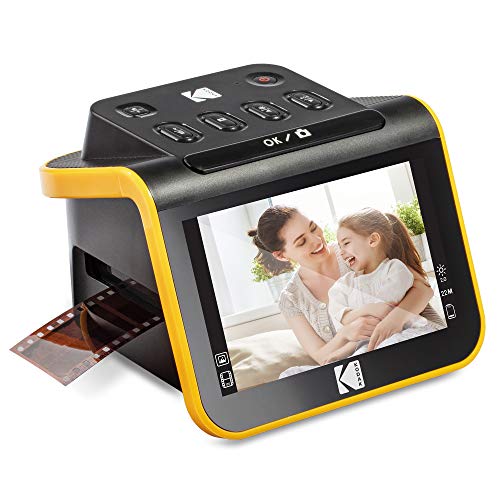
- 22MP scans with 5" LCD preview and editing
- Handles 135, 110, and 126 negatives plus slides
- Saves to SD card or connects to Type-C USB computers
Best For: Users who want simple standalone film scanning with optional PC connectivity
Touchscreen Negative Converter
HP Film & Slide Scanner, 7" LCD

- 7" touch LCD for preview, editing, and display
- Converts color and black-and-white negatives to digital files
- USB and HDMI connectivity for PC transfer or TV viewing
Best For: Beginners who want easy touchscreen scanning and simple computer transfer
High-Resolution Film Archiver
Magnasonic All-in-One 24MP Film Scanner

- 24MP output with direct JPEG saving
- Scans 35mm, 110, 126, Super 8, and slides
- On-device editing and HDMI viewing support
Best For: Anyone digitizing mixed film formats with a simple standalone workflow
Large-Format Slide Digitizer
KODAK Slide N Scan Max Film Scanner

- 13MP sensor with 22MP interpolated output
- Supports 135mm, 110mm, and 126mm negatives and slides
- Direct SD saving and one-touch editing
Best For: People who want quick batch-style scanning of old family film
All-in-One Digitizing Pick
Photo, Slide & Negative Scanner with 5" Large Screen

- Scans slides, negatives, photos, and business cards
- 5-inch LCD for on-device preview and editing
- Standalone use with SD card saving and USB transfer
Best For: Families digitizing mixed photo and film archives
Film-Only Classic
KODAK SCANZA Film & Slide Scanner
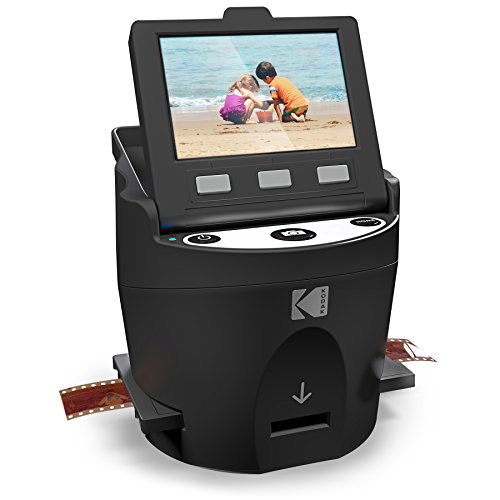
- Supports 35mm, 126, 110, Super 8, and 8mm
- 3.5-inch LCD with adjustable brightness and tilt
- Mac and PC compatible with included cables
Best For: Users scanning supported film and slide formats
Portable Quick Scan
ClearClick QuickConvert 2.0 Photo, Slide, and Negative Scanner
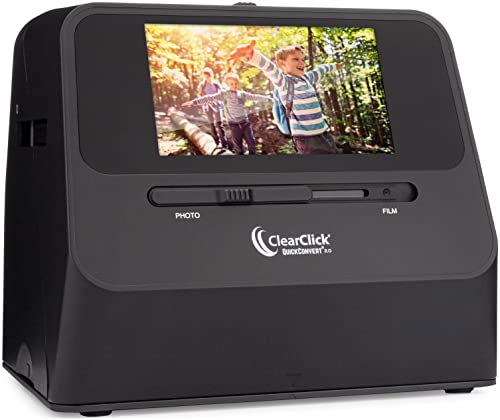
- Scans photos, slides, and 35mm/110/126 negatives
- Rechargeable battery for cordless scanning
- 5-inch LCD preview with SD card saving
Best For: Portable one-at-a-time scanning without a computer
Touchscreen Pick
HP Film & Slide Scanner HPFS500
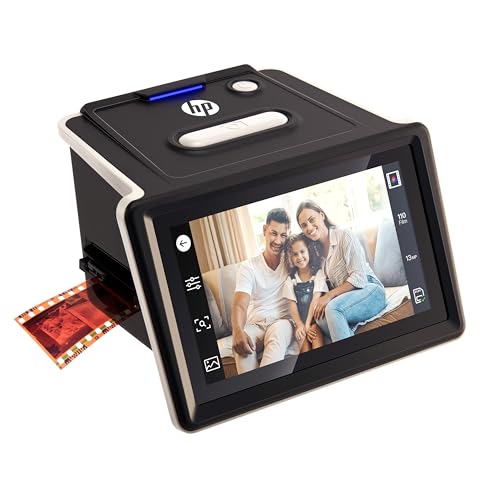
- 5-inch touchscreen for on-device preview and edits
- Supports 135, 126, and 110 negatives and slides
- USB-C powered with SD card saving
Best For: PC users who want an easy touchscreen film scanner
Large-Screen Option
BEONEGLOBAL ClearScan P7 Film Scanner

- 24MP scans with a 1/2.3-inch CMOS sensor
- 7-inch LCD and one-touch controls
- Supports 35mm, 126, 110, Super 8, and 8mm film
Best For: Home archivers who want a big-screen film scanner
TV-Ready Scanner
DigitPro 22MP Film & Slide Scanner

- Supports multiple film formats and slides
- HDMI output plus USB transfer to PC
- Includes holders, cleaning brush, and cables
Best For: Families who want easy scanning and TV viewing
Compact All-in-One Film Digitizer – KODAK Slide N Scan Film & Slide Scanner, 22MP
If you want negative scanners for pc that also work fully on their own, this KODAK model is a practical pick for converting old film and slides into digital files. It handles 135, 110, and 126 negatives plus 50mm slides, and you can save scans directly to an SD card or connect to a Type-C USB computer when you want a PC workflow.
Best For: Home users who want an easy standalone scanner for old negatives and slides with optional computer connection.
Pros:
- 22MP output with a 5″ LCD for previewing and editing on the device
- Supports 135, 110, and 126 negatives plus 50mm slides
- Quick-feed tray makes continuous loading faster and simpler
- Includes USB and HDMI cables plus film holders and a cleaning brush
Cons:
- SD card is not included
- Requires Windows 7 minimum for computer use
- Max card support is limited to 32GB SD or SDHC
This is a strong choice if you want a straightforward scanner that keeps the process simple and does not depend on editing software. The mix of on-device controls, PC connectivity, and broad film support makes it easy to digitize family archives.
Touchscreen Negative Converter – HP Film & Slide Scanner, 7" LCD
For buyers comparing negative scanners for pc, this HP Film & Slide Scanner offers a simple way to digitize both color and black-and-white negatives without a steep learning curve. Its 7-inch touch LCD, quick-feed tray, and USB/HDMI connections make it easy to preview, edit, and move scans into a computer workflow.
Best For: Beginners and casual archivists who want easy on-device control with computer transfer options.
Pros:
- 7″ touch display makes previewing and editing straightforward
- 13MP CMOS sensor converts color and black-and-white negatives
- Quick-feed tray supports 135, 126, and 110 formats with a 50mm adapter
- USB and HDMI ports support computer transfer and TV viewing
Cons:
- Resolution is listed as 1200 dpi rather than a higher megapixel figure
- Limited to the included film formats and adapter system
- Warranty is only 1 year limited
This HP model stands out if you want touch-based control and simple workflows instead of software-heavy scanning. It is well suited to old negatives and slides that need fast conversion and easy sharing.
High-Resolution Film Archiver – Magnasonic All-in-One 24MP Film Scanner
The Magnasonic FS71 is a good fit if you want negative scanners for pc alternatives that also work independently and deliver fast batch conversion. It scans 35mm, 110, 126, and Super 8 negatives, plus 135, 126, and 110 slides, then saves high-resolution JPEG files directly to an SD card without requiring a computer.
Best For: Users who want a quick, no-software workflow for digitizing mixed film archives.
Pros:
- 24MP output for high-resolution JPEG files
- Supports multiple film and slide formats, including Super 8 film
- 5″ LCD and HDMI output let you view scans on-device or on a TV/monitor
- On-device brightness and RGB corrections help fine-tune results
Cons:
- SD card is not included
- HDMI cable is not included
- Built-in memory is only 128MB, so SD storage is the practical route
This scanner is appealing if you want fast, simple conversion across several legacy formats. Its no-computer-needed design and direct adjustments make it practical for people digitizing a large photo archive.
Large-Format Slide Digitizer – KODAK Slide N Scan Max Film Scanner
If you are shopping for negative scanners for pc but want a smoother standalone process first, the KODAK Slide N Scan Max is built around quick loading and direct SD saving. It supports 135mm, 110mm, and 126mm slides and negatives, and its one-touch editing tools keep conversion simple for home archiving.
Best For: Users who want a fast, easy scanner for a large backlog of old negatives and slides.
Pros:
- 13MP CMOS sensor with up to 22MP interpolated output
- Supports 135mm, 110mm, and 126mm film formats
- Direct SD/SDHC saving up to 32GB without a computer
- One-touch editing simplifies resizing and color adjustment
Cons:
- SD card is not included
- Requires Windows 7 minimum for computer use
- Uses USB connection rather than broader port options
This model is a strong fit when speed and simplicity matter more than advanced controls. It keeps the digitizing process moving with a smooth tray and easy image adjustments, which is helpful for large family collections.
All-in-One Digitizing Pick – Photo, Slide & Negative Scanner with 5" Large Screen
If you want negative scanners for pc support but prefer a simpler standalone workflow, this all-in-one photo, slide, and negative scanner is built for fast home archiving. It converts 35mm slides, 135 and 110 film negatives, printed photos, and business cards into JPEGs, then lets you transfer files to your PC or Mac over USB.
Best For: Families and casual users who want an easy, no-computer scanner for mixed photo and film collections.
Pros:
- Supports slides, 35mm/135/110 negatives, printed photos, and business cards.
- 5-inch HD LCD makes previewing and checking scans easy on the device.
- Works offline with one-touch controls and no software or drivers to install.
- Saves scans to the included SD card for later USB transfer to PC or Mac.
Cons:
- Designed as a standalone unit, so it is not a direct PC-tethered scanner.
- Includes an 8GB SD card, which may fill up quickly with large archives.
Overall, this model is a practical choice if you want a simple digitizing station that can handle several media types and still work smoothly with a computer afterward for file transfer.
Film-Only Classic – KODAK SCANZA Film & Slide Scanner
Among negative scanners for pc users, the KODAK SCANZA is a focused film-to-JPEG option for people working with older film formats. It converts 35mm, 126, 110, Super 8, and 8mm negatives and slides, and includes both USB and HDMI connections for flexible setup.
Best For: Users who mainly scan supported film formats and want a familiar Kodak-branded desktop scanner.
Pros:
- Converts 35mm, 126, 110, Super 8, and 8mm negatives and slides.
- Built-in 3.5-inch color LCD with adjustable brightness and tilt.
- One-touch buttons and included adapters make operation straightforward.
- Mac and PC compatible, with USB power and HDMI cables included.
Cons:
- SD card is not included.
- Does not support film formats outside the listed compatibility range.
This is a solid pick if you want a straightforward film scanner with clear format support and included accessories, especially for older home movie and slide collections.
Portable Quick Scan – ClearClick QuickConvert 2.0 Photo, Slide, and Negative Scanner
If you are comparing negative scanners for pc convenience but want cordless, no-drama digitizing, the ClearClick QuickConvert 2.0 is built around speed and simplicity. It scans photos, slides, and negatives one at a time, saves JPEGs to an SD card, and can later be moved to a computer.
Best For: Home users who want a portable scanner for quick one-at-a-time conversions without needing a computer during scanning.
Pros:
- Scans 4×6 photos or smaller, plus 35mm, 110, and 126 negatives and slides.
- No computer or drivers required for scanning.
- Built-in rechargeable battery supports cord-free use.
- 5-inch preview LCD makes it easy to check scans immediately.
Cons:
- Scans one item at a time and does not have an autofeeder.
- Does not support 5×7 photos.
For quick home conversion projects, this model stands out for its portable design and easy operation, especially if you want to digitize prints and film without setting up a PC at the scanner.
Touchscreen Pick – HP Film & Slide Scanner HPFS500
If you want a straightforward negative scanner for pc use with modern convenience, the HPFS500 is built to digitize slides and film without requiring a computer during the scan. It handles 35mm, 126, and 110 negatives and slides, while the 5-inch touchscreen lets you preview and edit directly on the device before saving to an SD card.
Best For: Users who want a PC-compatible film scanner with an onboard touchscreen and USB-C power.
Pros:
- 5-inch all-angle LCD touchscreen for previewing and editing on the scanner
- 13MP CMOS sensor with 22MP interpolation for detailed scans
- Supports 135, 126, and 110 film negative strips and positive slides
- USB-C powered and can save directly to an SD card
Cons:
- Scanning is designed to work without a computer, so PC transfer is mainly for saved files
- Resolution is listed as 13MP rather than a higher native scan spec
The HPFS500 is a practical pick if you want a compact scanner that makes film digitizing simple and portable. Its biggest strengths are the touchscreen controls, broad format support, and USB-C flexibility for use from a PC USB port or adapter.
Large-Screen Option – BEONEGLOBAL ClearScan P7 Film Scanner
The BEONEGLOBAL ClearScan P7 is a strong negative scanner for pc shoppers who also want a self-contained film digitizer. It scans old film and slides into JPEG files, supports multiple formats, and uses a 7-inch LCD plus one-touch controls to keep the process simple from start to finish.
Best For: People who want a large-screen, no-computer-needed scanner for mixed film formats.
Pros:
- 24MP scanning with a premium 1/2.3-inch CMOS sensor
- Large 7-inch LCD makes previewing and reviewing easier
- Supports 35mm/135, 126, 110, Super 8, and 8mm film and slides
- Includes an SD card so you can start scanning right away
Cons:
- Designed for direct-to-card scanning, so it is not a traditional PC-connected workflow
- More screen size and features may make it bulkier than simpler tabletop scanners
For users with mixed film archives, the ClearScan P7 offers a lot of flexibility without adding setup complexity. Its large screen, included SD card, and broad format compatibility make it an easy option for home archiving.
TV-Ready Scanner – DigitPro 22MP Film & Slide Scanner
This DigitPro model is a flexible negative scanner for pc users who also want easy TV viewing and direct file transfer. It supports several film formats, offers one-touch scanning, and can save images internally or to an SD card before moving them over USB-C to a computer.
Best For: Buyers who want a film scanner with HDMI output and PC transfer options.
Pros:
- Supports 35mm/135, 110, 126, and Super 8 film plus slides
- One-touch scanning with built-in adjustments for color, brightness, and date/time
- HDMI output lets you view scans on a TV
- Includes film holders, cleaning brush, HDMI cable, USB cable, and power adapter
Cons:
- Resolution is listed as 1080P, which is lower than some higher-MP film scanners
- External SD card is not included, even though it supports one
The DigitPro C190 is a solid all-in-one choice if you want simple scanning and easy sharing on a bigger screen. The included accessory kit and multiple output paths make it especially convenient for family photo projects and backup workflows.
How We Picked the Best Negative Scanners for PC
To narrow down the best Negative Scanners for PC, we looked for models that are easy to use, support common film formats, and offer practical image settings for everyday archiving. We also favored scanners with clear displays, straightforward transfer options, and a workflow that works well whether you are scanning a few family slides or building a larger digital archive.
Quick Comparison
Most buyers will choose between compact scanners with smaller screens and larger, more convenient units with bigger displays and easier previewing. Higher megapixel claims can be helpful, but they matter less if the scanner lacks reliable film alignment, decent color correction, or simple file export. If you plan to scan often, a larger screen and faster batch-style workflow can save a lot of time.
Key Buying Factors for Negative Scanners for PC
Film and Slide Compatibility
Check that the scanner supports the formats you actually own, such as 35mm negatives, 110, 126, and possibly Super 8 or 8mm film. Some models are better suited to slides, while others are more versatile for mixed collections.
Resolution and Output Quality
Look beyond headline megapixels and consider how well the scanner captures detail, shadow depth, and color consistency. For most home users, a solid balance of sharpness and accurate conversion is more valuable than exaggerated specs.
Computer Workflow
Since these are Negative Scanners for PC, make sure the transfer process fits your setup. USB-C or USB connections, easy file saving, and compatibility with your editing software can make post-scan cleanup much easier.
Display Size and Controls
A larger screen can make alignment and previewing simpler, especially if you scan frequently. Easy-access buttons and intuitive menus also help reduce mistakes and speed up repeat jobs.
Who Should Buy Which Negative Scanners for PC?
If you are digitizing a small family archive, a compact, straightforward scanner may be all you need. If you plan to process many negatives or multiple film formats, prioritize a larger display, broader format support, and a smoother workflow. For users who want maximum convenience, choose a model that minimizes setup and lets you move quickly from preview to saved file with minimal fuss.
In short, the best choice depends on your film collection, how often you scan, and how much editing you want to do after import.
