Choosing the right mold rubber can make or break a sculpture project. The best options balance detail capture, flexibility, tear resistance, and demolding ease.
This roundup focuses on practical choices for artists, hobbyists, and makers who want clean results whether they’re casting plaster, resin, or concrete.
Best 10 Mold Making Rubber for Sculpture Picks for 2026
Platinum-Grade All-Purpose Pick
BBDINO 1:1 Sapphire Blue Silicone Kit

- 1:1 mix by volume or weight
- 30-minute working time; cures in 5 hours
- Platinum silicone for durable reusable molds
Best For: Durable molds for resin, plaster, concrete, candle, jewelry, and low-temp metal
Novice-Friendly Tin Cure Option
Smooth-On OOMOO 30 Silicone Rubber

- 1:1 by volume; no scale needed
- No vacuum degassing required
- Good for one- to two-piece block molds
Best For: Beginners making simple sculpture, plaster, resin, or wax molds
Flexible Brush-On Choice
EnvironMolds LayTex Liquid Latex

- Brush-on or spray-on application
- Soft flexible film with low shrinkage
- Can be thinned with soft water
Best For: Detail work and reproductions in plaster and concrete
Long-Pour Platinum Pick
Mold Star 15 Slow Platinum Silicone
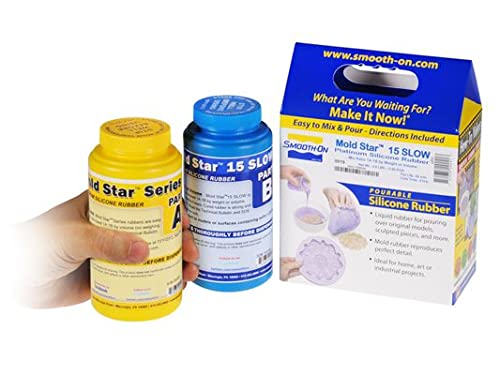
- 50-minute pot life for careful pours
- 1:1 mix by volume
- Soft, strong, tear-resistant rubber
Best For: Sculptors needing extra working time for wax, gypsum, resin, or concrete molds
Beginner-Friendly Silicone Putty
LET'S RESIN 1LB Mold Making Kit

- 1:1 hand-mix putty needs no cups or stir sticks
- About 5 minutes working time; demolds in 15-20 minutes
- Flexible 40A silicone for resin, soap, wax, clay, and sculpture
Best For: Beginners making small sculpture molds fast
Detail-Oriented Pour Silicone
15A Platinum Silicone Rubber Kit

- Low-viscosity platinum silicone helps capture fine detail
- 30-minute work time and 4-hour initial cure
- Soft 15A cure flexes around undercuts for easier release
Best For: Detailed sculpture molds and larger batch projects
High-Elastic Fast-Cure Kit
CHANGTIKEJI 64oz Liquid Silicone

- 10A platinum silicone for high elasticity and fine detail
- 1:1 mix; no vacuum degassing needed
- Cures in about 2-4 hours at room temperature
Best For: Fast, flexible molds for detailed sculpture casting
Premium 30A Support
LET'S RESIN 36oz Blue Silicone Kit

- 30A hardness adds support and tear resistance
- 1:1 mix ratio with easy pouring
- Self-degassing formula reduces bubble issues
Best For: Sturdier molds for sculpture, resin, wax, candle, and soap work
Starter Trial Kit
LET'S RESIN 8oz Translucent Silicone

- Includes cups, sticks, gloves, and silicone
- Fast room-temperature cure with easy mixing
- Good for detailed beginner mold projects
Best For: Beginners testing silicone mold making on small sculpture projects
Fast-Cure Value Pick
BBDINO 21.2oz Jade Green Silicone

- 1:1 by volume with low-viscosity pouring
- About 30 minutes working time and 4-hour cure
- Flexible, strong, and easy to demold
Best For: Versatile casting molds for sculpture, resin, plaster, wax, and soap
Platinum-Grade All-Purpose Pick – BBDINO 1:1 Sapphire Blue Silicone Kit
If you want mold making rubber for sculpture that balances easy mixing with strong repeat use, this BBDINO silicone kit is built for practical shop work. It uses a 1:1 mix by volume or weight, has low viscosity for easier mixing, and cures in about 5 hours without a vacuum chamber.
Best For: Makers who want a durable platinum silicone for resin, plaster, concrete, candle, jewelry, and low-temperature metal casting.
Pros:
- 1:1 mix by volume or weight keeps setup simple.
- Low viscosity and self-degassing help it mix smoothly.
- 30-minute working time gives room for detailed pours.
- Platinum-grade formula is designed for highly durable, reusable molds.
Cons:
- Cures in about 5 hours, so it is not the fastest option.
- Best suited to users comfortable handling a two-part silicone system.
This is a strong all-around choice if you need mold making rubber for sculpture and other casting projects that should hold up over repeated use. The included tools and straightforward mix ratio make it especially approachable for a durable silicone mold kit.
Novice-Friendly Tin Cure Option – Smooth-On OOMOO 30 Silicone Rubber
Smooth-On OOMOO™ 30 Tin Cure Silicone Rubber, Easy to Use Silicone Mold Making Kit, Pint Unit
Check Price On AmazonFor mold making rubber for sculpture projects where simplicity matters more than maximum tear strength, OOMOO 30 is an easy-to-use tin cure silicone. It mixes 1A:1B by volume, does not require weighing or vacuum degassing, and cures in about 6 hours.
Best For: Beginner mold makers and small one- to two-piece block molds for sculpture, prototype reproduction, plaster, resin, and wax casting.
Pros:
- 1:1 by volume mix makes measuring straightforward.
- No scale or vacuum degassing required.
- Designed for art-related projects and industrial applications.
- Suitable for one- to two-piece block molds.
Cons:
- Noted to have lower tear strength than higher-performance silicones.
- Best suited to simpler mold shapes rather than demanding production use.
OOMOO 30 is a practical entry point if you want a forgiving silicone mold-making kit for sculpture reproduction and similar casting jobs. It trades some durability for ease of use, which makes it appealing for first-time mold makers.
Flexible Brush-On Choice – EnvironMolds LayTex Liquid Latex
If your mold making rubber for sculpture needs to capture detail with a brush or spray application, this liquid latex is worth a look. It forms a soft, flexible rubber film with low shrinkage and can be thinned with demineralized or soft water for smoother application.
Best For: Detail-focused arts and crafts work that needs a brush-on or spray-on latex mold compound for plaster and concrete reproductions.
Pros:
- Can be applied by brush or spray.
- Flexible rubber film helps preserve fine detail.
- Low shrinkage supports accurate reproductions.
- Storage-stable formula resists separating over time.
Cons:
- Latex is a different workflow than pourable silicone.
- May need water adjustment for preferred viscosity.
This is a useful option when you want a more traditional brush-on approach for detailed sculpture molds. It is especially appealing for projects where flexibility, fine detail, and ease of application matter more than rigid mold strength.
Long-Pour Platinum Pick – Mold Star 15 Slow Platinum Silicone
When you need mold making rubber for sculpture with a longer working window, Mold Star 15 Slow is built for easy handling. This platinum silicone mixes 1A:1B by volume, cures into a soft yet strong rubber, and offers a 50-minute pot life with about a 4-hour cure time.
Best For: Sculptors and mold makers who want a slow-setting platinum silicone for wax, gypsum, resin, concrete, and similar casting materials.
Pros:
- 50-minute pot life gives extra time for careful pouring.
- 1:1 volume mix removes the need for weighing.
- Cures to a soft, strong, tear-resistant rubber.
- Works with wax, gypsum, resins, concrete, and more.
Cons:
- Longer pot life means a slower overall workflow.
- Pint size may be limiting for larger mold projects.
Mold Star 15 Slow is a solid fit if you want more working time without giving up the benefits of platinum silicone. It is especially useful for sculpture molds where careful placement and a relaxed pour matter.
Beginner-Friendly Silicone Putty – LET'S RESIN 1LB Mold Making Kit
If you want mold making rubber for sculpture without needing cups, stir sticks, or special tools, this LET’S RESIN silicone putty is a simple place to start. The 1:1 hand-mix formula and short working window make it practical for quick custom molds on small sculpted pieces, and the flexible 40A material is designed to demold easily while holding detail for resin, soap, wax, clay, and art restoration work.
Best For: Beginners and hobbyists who want a fast, tool-free way to make reusable molds for sculpture and craft projects.
Pros:
- Hand-mix 1:1 putty keeps setup simple and beginner-friendly.
- Tool-free process with about 5 minutes of working time and 15-20 minutes to demold.
- Flexible silicone is rated for sculpture, jewelry, prototyping, and restoration use.
- Non-toxic, odorless, and heat-tolerant up to 392°F/200°C.
Cons:
- Short working time may feel rushed on larger or more complex sculpture forms.
- Putty format is less suited to very large molds than pourable silicone systems.
This is a good fit if your priority is speed and simplicity over maximum working time. For small sculpture molds, it offers an approachable way to create reusable impressions without extra equipment.
Detail-Oriented Pour Silicone – 15A Platinum Silicone Rubber Kit
For mold making rubber for sculpture that needs more flow and more time, this 15A platinum silicone kit is built around detailed pours. Its low-viscosity, self-degassing formula is meant to reach narrow features and reduce trapped air, while the softer cure helps finished molds flex around undercuts and complex sculpted shapes.
Best For: Makers who need a softer pour silicone for detailed sculpture molds, larger casts, or repeat batch projects.
Pros:
- 30-minute working time gives more room for careful pouring and positioning.
- Low-viscosity, self-degassing flow helps air rise naturally and improves detail pickup.
- Soft 15A silicone flexes easily for undercuts and easier demolding.
- 66 oz kit suits larger molds and multiple projects.
Cons:
- Mixing is by weight, so accurate measuring matters.
- 4-hour initial cure still requires patience before demolding.
If your sculpture work involves fine detail or deeper forms, this kit offers more control than fast-set options. The combination of flow, softness, and larger volume makes it a strong pick for more ambitious mold projects.
High-Elastic Fast-Cure Kit – CHANGTIKEJI 64oz Liquid Silicone
If you need mold making rubber for sculpture with strong elasticity and a fast turnaround, this CHANGTIKEJI liquid silicone kit is worth a look. The 1:1 platinum-cure formula is designed to capture very fine detail, and the low-viscosity mix is intended to self-debubble without vacuum equipment, which can simplify the mold-making process for sculpted pieces.
Best For: Crafters who want a highly flexible, fast-curing silicone for detailed sculpture and casting projects.
Pros:
- 10A silicone is highly elastic and designed to replicate tiny details accurately.
- No vacuum degassing needed; bubbles are said to disappear within 1.5 hours at room temperature.
- 1:1 by weight or volume keeps mixing straightforward.
- Fast cure time of about 2-4 hours at 22°C helps speed up projects.
Cons:
- Shorter working window may be less forgiving on complex pours.
- Food-grade and craft versatility may be more than you need if you only make sculpture molds.
This kit stands out for flexibility and speed, especially when you want detailed molds without extra degassing steps. It is a practical choice for sculpture makers who value easy release and fast return-to-cast workflow.
Premium 30A Support – LET'S RESIN 36oz Blue Silicone Kit
If you want mold making rubber for sculpture with a bit more body and tear resistance, this LET’S RESIN 30A kit is built for stronger, more stable molds. The platinum-cured formula is non-toxic, low-odor, and designed to mix and pour easily, while the blue color helps you see whether the two parts are blended evenly.
Best For: Sculptors and crafters making sturdier resin, wax, candle, or soap molds, especially when extra support matters.
Pros:
- 30A hardness offers better support and tear resistance than softer 0A and 15A options
- 1:1 by weight mixing is straightforward, with low viscosity for easy pouring
- Self-degassing formula helps bubbles disappear without vacuum equipment
- Suitable for 3D molds, two-part molds, and tool accessory molds
Cons:
- At least 4 hours cure time, with longer waits possible for thicker molds
- Not the softest option if you want very flexible rubber
Overall, this is a practical pick if your sculpture molds need more structure and durability than a softer silicone can provide. It balances ease of use with added firmness, making it a solid all-around choice for detailed craft work.
Starter Trial Kit – LET'S RESIN 8oz Translucent Silicone
This compact mold making rubber for sculpture is a good way to test silicone molding without committing to a larger kit. The translucent platinum-cured silicone is made for easy mixing, low-viscosity pouring, and reliable results on detailed resin, wax, soap, or plaster molds.
Best For: Beginners who want a small, low-risk starter kit for learning silicone mold making.
Pros:
- Includes cups, sticks, and gloves so you can start right away
- 30-40 minute working time with 3-6 hour room-temperature cure
- Self-degassing behavior helps bubbles disappear without a vacuum setup
- Platinum-cured silicone is non-toxic, odorless, and designed for fine detail
Cons:
- Small 8 oz size is limited for larger sculpture molds
- Not intended for squishy flex-rubber projects
As a trial-sized option, this kit keeps the learning curve manageable while still offering the basic performance needed for clean mold results. It makes sense if you want to practice the process before moving up to a bigger mold-making setup.
Fast-Cure Value Pick – BBDINO 21.2oz Jade Green Silicone
For mold making rubber for sculpture that aims to be simple, fast, and easy to demold, this BBDINO kit is a strong middle-ground choice. It uses a platinum-grade formula with low viscosity, 1:1 by volume mixing, and a vivid jade green color that makes it easier to see when parts A and B are blended well.
Best For: Crafters who want a versatile silicone kit for resin, plaster, wax, soap, or candle molds.
Pros:
- 30-minute working time and about 4-hour cure time at room temperature
- Low-viscosity silicone mixes and pours easily without special equipment
- Excellent flexibility and strength for 3D and flat molds
- Food-contact-safe, skin-contact-safe, and non-toxic according to the product notes
Cons:
- Mixing by volume may be less precise for users who prefer weighing components
- Color is helpful for mixing, but not as clear as translucent silicone for viewing detail
This kit stands out for its simple workflow and broad application range, especially if you want a dependable mold silicone that cures fairly quickly. The added shelf-life claim also makes it a practical choice for occasional use.
How We Picked the Best Mold Making Rubber for Sculpture
For this roundup, we prioritized Mold Making Rubber for Sculpture that offers dependable detail reproduction, workable cure times, and enough flexibility to remove undercuts without damaging the master. We also looked at mix ratios, cure type, and whether each formula suits beginners or more advanced studio use.
Quick Comparison
Not every sculpting project needs the same rubber. Platinum-cure silicones are usually the best all-around choice for precision, durability, and repeat use. Tin-cure silicones can be easier for some users and may be more forgiving with certain materials. Latex can still be useful for specific hollow or brush-on applications, especially when flexibility matters more than ultra-fine detail.
Key Buying Factors for Mold Making Rubber for Sculpture
Detail and Surface Finish
For portrait work, texture-heavy sculpture, or small decorative parts, choose a rubber with low viscosity and good flow so it captures edges, tool marks, and fine textures. Self-degassing formulas can help reduce bubbles and improve surface quality.
Hardness and Flexibility
Shore hardness affects how easy the mold is to flex off the original and the finished cast. Softer rubbers are easier to release, while firmer rubbers often hold shape better for larger molds. The right balance depends on undercuts and part geometry.
Mix Ratio and Working Time
A simple 1:1 mix ratio is beginner-friendly and reduces measuring mistakes. Longer working times are helpful for large molds or complex sculpture surfaces, while faster cure materials suit smaller projects and quicker turnarounds.
Compatibility with Your Casting Material
Match the mold rubber to what you plan to cast. Plaster and concrete may benefit from tougher, more durable molds, while resin and wax work well with detail-focused silicone systems. If you need a reusable mold, prioritize tear strength and long-term stability.
Who Should Buy Which Mold Making Rubber for Sculpture?
If you want the most versatile choice for repeated studio use, platinum-cure silicone is usually the safest bet. If you’re new to molding and want an easier learning curve, a straightforward 1:1 kit can be ideal. If your project is experimental, small-scale, or budget-sensitive, a trial kit may be the best way to test a formula before committing to a larger purchase.
For sculpture makers, the best results usually come from matching the rubber to the shape of the original, the casting material, and how often you plan to reuse the mold. The right choice will save time, reduce failures, and help preserve sculptural detail from master to final cast.
