Finding the best 3D scanner for clay models means balancing fine detail, tracking stability, scan size, and workflow simplicity. Clay can have subtle contours and low-contrast surfaces, so scanner performance matters as much as headline accuracy.
This roundup compares 10 scanners suited to different sculpting and fabrication needs, from compact handheld models to faster systems designed for larger objects. Use the guide below to narrow your choice by detail requirements, budget, portability, and intended output.
Best 10 3d Scanner for Clay Models Picks for 2026
Premium Wireless Precision Pick
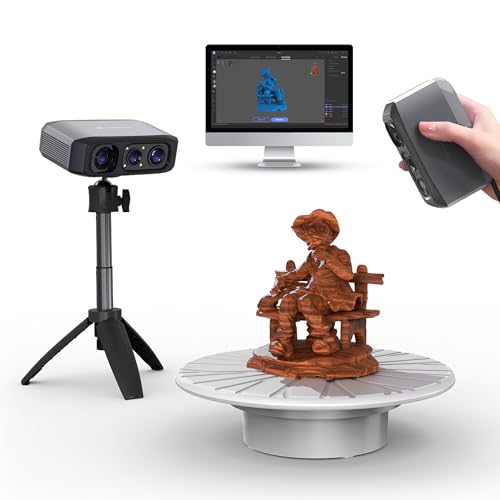
Creality Pika Portable 3D Scanner

- 0.03mm accuracy with blue laser detail capture
- Marker-free scanning and dark-surface support
- 260g wireless design with dual batteries
Best For: Artists needing portable, high-detail scanning for clay models
Beginner-Friendly Tracking Choice
- AI visual tracking supports model repair
- Optical anti-shake helps steady handheld scans
- Marker-free workflow with lifetime software updates
Best For: Beginners scanning clay forms with assisted software features
Steady Full-Color Value Pick
Creality CR-Ferret SE 3D Scanner
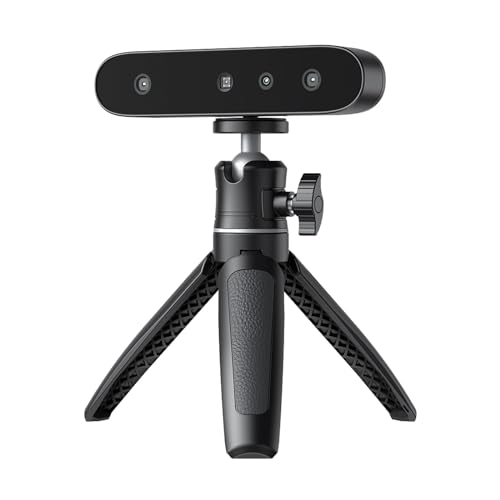
- Anti-shake tracking supports steadier handheld scans
- 24-bit full-color capture with a 2MP camera
- Lightweight 105g body and no spray for dark surfaces
Best For: PC-based clay scanning with color capture and easy handling
Small-Detail Specialist
3DMakerpro Seal Lite 3D Scanner

- Up to 0.02mm accuracy from blue LED light
- Designed for 10–300mm small-format objects
- Includes anti-shake tools and turntable
Best For: Indoor scanning of small, highly detailed clay models
Best All-Around Choice

- 0.05mm accuracy and up to 30fps scanning
- Full-color capture for detailed clay artwork
- Scans objects from 0.8 to 78 inches
Best For: Makers needing a flexible scanner for clay models and larger objects
Best Detail-Focused Kit

- Up to 0.03mm accuracy for fine details
- Includes turntable and tripod
- Automatic alignment and error correction software
Best For: Indoor scanning of small to medium clay sculptures
Best Beginner-Friendly Option

- One-click scanning for easier operation
- Anti-shake technology supports steadier captures
- Lightweight 105g design with 24-bit color
Best For: Beginners scanning clay models in studios or on the go
Accessible Entry-Level Pick

- Up to 0.07mm accuracy
- Markerless NIR scanning
- Handles 40mm–1200mm objects
Best For: DIY makers and clay prototypes
High-Detail Choice
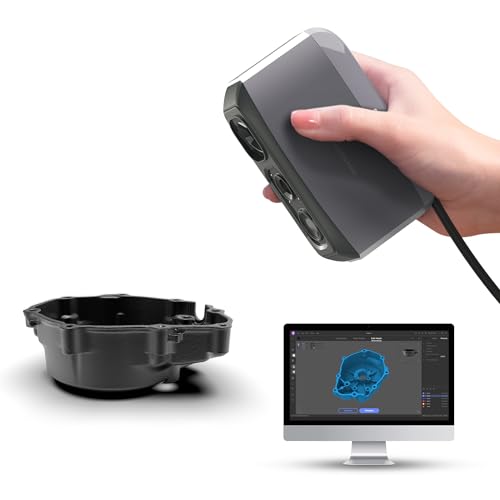
- Up to 0.05mm accuracy
- 0.1mm resolution for fine details
- Lightweight, quiet handheld design
Best For: Detailed clay sculptures and display models
Portable Cross-Platform Pick

- Wireless PC and mobile scanning
- 105g portable design
- Full-color scanning up to 0.1mm accuracy
Best For: Larger clay models and mobile workflows
Premium Wireless Precision Pick – Creality Pika Portable 3D Scanner
For shoppers seeking a versatile 3d scanner for clay models, the Creality Pika combines a fine-detail blue laser mode with NIR structured light. Its 0.03mm accuracy, marker-free wired scanning, and support for objects from 10mm to 2m make it adaptable for clay sculptures ranging from miniatures to larger forms.
Best For: Clay artists who want high detail, wireless portability, and flexible scanning modes.
Pros:
- Blue laser mode is designed to capture intricate surface detail at up to 0.03mm accuracy.
- Marker-free scanning, plus direct scanning of dark and metallic surfaces without spray.
- Lightweight 260g design with Wi-Fi 6, a touchscreen, and dual swappable batteries.
- Exports STL, OBJ, PLY, and ASC files for printing and CAD workflows.
Cons:
- Best experience requires checking compatibility with your computer or smartphone.
- iPad compatibility and software support are still being optimized.
The Pika is the most feature-rich option here for artists who need one scanner for small clay details and larger objects. Its extra modes and AI tools add flexibility, though buyers should confirm device compatibility before purchasing.
Beginner-Friendly Tracking Choice – 3DMakerpro Moose Lite Premium
The 3DMakerpro Moose Lite Premium is a practical 3d scanner for clay models when ease of use matters. AI visual tracking, optical anti-shake hardware, and marker-free scanning are intended to make handheld capture more forgiving for beginners.
Best For: Beginners who want assisted handheld scanning and software-supported model repair.
Pros:
- AI visual tracking can detect vulnerabilities and support automated 3D model repair.
- Optical anti-shake modules help compensate for shaky hands.
- Marker-free technology reduces setup time on clay pieces.
- JMStudio includes lifetime free OTA software updates and a re-scanning function.
Cons:
- The supplied notes list a 10FPS scanning speed, which is slower than the fastest option here.
- At 3.65 pounds, it is less lightweight than the compact scanners in this roundup.
Moose Lite Premium emphasizes a smoother learning curve rather than headline speed. Its anti-shake and repair features may be especially useful for scanning hand-shaped clay forms without extensive setup.
Steady Full-Color Value Pick – Creality CR-Ferret SE 3D Scanner
The Creality CR-Ferret SE offers a straightforward 3d scanner for clay models with anti-shake tracking and 24-bit full-color capture. Its compact 105g body is easy to carry, while the built-in color camera can preserve the original appearance of a clay piece in the scan.
Best For: PC users who value stable handheld scanning, portability, and full-color results.
Pros:
- Anti-shake technology helps maintain smoother scans with unsteady hands.
- 24-bit full-color scanning uses a 2MP camera to capture object colors.
- Scans black and metallic surfaces without scanning spray.
- Lightweight 105g design is convenient for portable use.
Cons:
- Ferret SE supports PC scanning only and connects through USB.
- It does not include the battery handle found with certain other Ferret models.
This is a sensible choice for clay artists who plan to scan at a Windows computer and want color information alongside geometry. The PC-only limitation is the main workflow trade-off.
Small-Detail Specialist – 3DMakerpro Seal Lite 3D Scanner
The 3DMakerpro Seal Lite is built for small clay models and detailed surface work. Its blue LED structured light reaches up to 0.02mm accuracy and is intended for objects from 10mm to 300mm, making it a focused 3d scanner for clay models such as miniatures and small sculptural studies.
Best For: Indoor scanning of small clay models where fine edges and surface dents matter.
Pros:
- Blue LED light source supports up to 0.02mm accuracy for small details.
- Designed for small-format objects from 10mm to 300mm.
- Scan-back and anti-shake features can help produce more stable results.
- JMStudio supports visual tracking, auto-alignment, error correction, and STL/OBJ/PLY/ASC export.
Cons:
- Captures mono texture only rather than full color.
- Indoor use is suggested, and the scanner requires a relatively powerful PC.
- It has a learning curve for new users.
Seal Lite is the focused choice for small clay pieces where detail takes priority over color or large-object coverage. Its included tripod and turntable can also help create a more controlled scanning setup.
Best All-Around Choice – Creality Otter Lite Basic
The Creality Otter Lite Basic is a versatile 3D scanner for clay models when you want detailed geometry, color capture, and flexibility across small and large subjects. Its quad-camera design, 0.05mm accuracy, and support for geometry, texture, and marker alignment make it suitable for scanning clay sculptures and preparing models for digital editing or 3D printing.
Best For: Makers who want one handheld scanner for detailed clay models, figurines, artwork, and larger objects.
Pros:
- Up to 0.05mm accuracy and scanning speeds of up to 30fps.
- 24-bit full-color texture capture helps preserve the appearance of painted or textured clay pieces.
- Quad-camera coverage supports objects from 0.8 to 78 inches.
- Exports to common formats including OBJ, STL, PLY, 3MF, GLTF, and FBX.
Cons:
- The optional Scan Bridge handle is sold separately.
- Handheld scanning may benefit from added stabilization during longer sessions.
For clay-model workflows that may expand beyond small sculptures, the Otter Lite Basic offers an unusually broad scanning range and strong color capabilities. Its software compatibility across Windows, macOS, iOS, and Android also adds flexibility.
Best Detail-Focused Kit – 3DMakerpro Moose Premium
The 3DMakerpro Moose Premium is a strong 3D scanner for clay models when fine detail is the priority. Its blue LED structured light system offers up to 0.03mm accuracy, while the included turntable and tripod can make scanning small and medium clay sculptures more controlled.
Best For: Artists and makers scanning medium-size clay models indoors with a guided desktop-style setup.
Pros:
- Up to 0.03mm accuracy with 0.07mm resolution.
- Captures 24-bit color for realistic tones and textures.
- Includes a turntable, tripod, power adapter, and data cable.
- JMStudio supports automatic alignment, visual tracking, error correction, and OBJ, STL, PLY, and ASC exports.
Cons:
- The recommended working distance is relatively specific at 150–400mm.
- Best results are recommended indoors.
- As a handheld scanner, it may require practice and a capable computer.
Moose Premium is appealing for clay artists who want high stated accuracy and useful included accessories. The turntable and software tools can help create a repeatable process, though beginners should expect a learning period.
Best Beginner-Friendly Option – Creality CR-Ferret SE
The Creality CR-Ferret SE is a practical 3D scanner for clay models if you value simple operation and portability. Its one-click workflow, anti-shake technology, and 24-bit color camera make it approachable for beginners digitizing clay pieces for modeling or 3D printing.
Best For: Beginners and mobile makers who want a lightweight scanner with a straightforward workflow.
Pros:
- Anti-shake technology helps reduce interference from hand movement.
- One-click scanning is designed for beginner-friendly operation.
- 24-bit full-color capture produces colorful 3D models.
- At 105g, the scanner is easy to carry between studio and workshop.
Cons:
- Its stated 0.1mm precision is lower than the other scanners in this roundup.
- The supplied notes do not specify a supported object-size range.
- Compatibility is listed for Mac and Windows rather than mobile operating systems.
CR-Ferret SE makes the most sense when ease of use and portability matter more than the highest available detail specification. It is a convenient starting point for digitizing clay models, especially for users who prefer a simple scanning process.
Accessible Entry-Level Pick – 3DMakerpro Fox
The 3DMakerpro Fox is a practical entry point for shoppers seeking a 3d scanner for clay models, prototypes, and other small-to-medium objects. Its NIR light, markerless tracking, and up to 0.07mm accuracy can simplify setup, but getting print-ready results still requires patience and some mesh-editing knowledge.
Best For: DIY makers, STEM projects, artistic prototypes, and clay models measuring roughly 40mm to 1200mm.
Pros:
- Markerless tracking avoids applying target dots to the model.
- Up to 0.07mm accuracy captures useful structural detail.
- Exports OBJ, STL, PLY, and ASC files through JMStudio.
- NIR scanning is designed to be safe for direct face and body scanning.
Cons:
- Requires a learning curve for scanning, mesh refinement, and slicing.
- A capable PC with a dedicated GPU is strongly recommended.
- Its optimal working distance is relatively close at 150–400mm.
The Fox offers a reasonable balance of accessibility and detail for clay-model digitization, especially when budget and straightforward markerless setup matter. Plan on post-processing before expecting consistently successful 3D prints.
High-Detail Choice – 3DMakerpro Moose Lite
The 3DMakerpro Moose Lite is a strong option when a 3d scanner for clay models needs to preserve fine surface information. Blue-light scanning, 0.05mm accuracy, and 0.1mm resolution support detailed captures, while AI tracking and marker-free structured light can make the workflow more convenient.
Best For: Detailed clay sculptures, display models, and users who want a lightweight Windows or MacOS scanning setup.
Pros:
- Up to 0.05mm accuracy and 0.1mm resolution target fine details.
- AI tracking and marker-free scanning can simplify model capture.
- Lightweight 250g design with no fan noise.
- Exports OBJ, STL, PLY, and ASC files through JMStudio.
Cons:
- The plastic Lite version is less premium than the aluminum-alloy Moose.
- A compatible computer is required; listed support is Windows 10/11 64-bit and MacOS 12/13.
- Best results can still depend on lighting, surface characteristics, and careful scanning technique.
For clay work where texture and form detail are priorities, Moose Lite is the most precision-focused choice in this group. Its compact, quiet design also suits studios where handheld scanning comfort matters.
Portable Cross-Platform Pick – Creality CR-Scan Ferret Pro
The Creality CR-Scan Ferret Pro is a convenient 3d scanner for clay models when portability and device flexibility are important. It supports wireless scanning across PC, MacOS, Android, and iOS, and its full-color capture can be useful for documenting larger sculptural work, though it is not intended for very small or highly precise parts.
Best For: Beginners, mobile scanning, larger clay models from about 50mm to 2000mm, and creators who want full-color output.
Pros:
- Lightweight 105g body is easy to carry around a studio or workshop.
- Wireless Wi-Fi 6 scanning works with PC, MacOS, Android, and iOS.
- Full-color 24-bit scanning and up to 0.1mm accuracy support presentation-ready captures.
- Kit includes a WiFi box, tripod, power bank, phone holder, and carrying case.
Cons:
- Not suitable for very small or highly detailed items such as jewelry or precision parts.
- Reflective, transparent, and very dark surfaces may scan poorly.
- Mobile use requires compatible newer devices and adequate RAM.
Ferret Pro is the practical choice for scanning larger clay pieces away from a desktop workstation. Choose it over a higher-precision scanner when wireless convenience, color capture, and broad device compatibility outweigh maximum fine-detail performance.
How We Picked the Best 3d Scanner for Clay Models
We evaluated the selected scanners by the features most relevant to clay sculpting and digital fabrication: stated accuracy, scanning speed, tracking technology, supported object sizes, color and texture capture, connectivity, and ease of use. We also considered whether each model is better suited to small figurines, medium sculptures, larger forms, or general-purpose scanning.
Accuracy figures are manufacturer claims and can vary with lighting, calibration, surface finish, scan distance, software settings, and operator technique. Clay with a matte finish is generally easier to scan than glossy, wet, or highly reflective surfaces, but deep recesses and thin protrusions still require careful positioning.
Quick Comparison
| Best For | What to Prioritize | Useful Features |
|---|---|---|
| Small, highly detailed sculptures | Fine stated accuracy and stable tracking | Blue light, close-range scanning, detailed texture capture |
| Medium clay figures | Balanced accuracy and speed | Handheld operation, anti-shake tracking, color scanning |
| Large sculptures | Wide scanning range and reliable alignment | Multiple scan modes, AI-assisted completion, fast capture |
| Portable workflows | Low setup complexity | Wireless or mobile compatibility and compact hardware |
Key Buying Factors for a 3d Scanner for Clay Models
Accuracy and Detail
Choose a scanner with enough resolution for the marks you need to preserve. A very high stated accuracy is valuable for small facial features, tool lines, and miniature work, while larger sculptures may benefit more from dependable tracking and coverage.
Tracking and Scan Stability
Anti-shake systems, structured light, laser modes, and AI-assisted alignment can reduce drift as you move around a sculpture. Stable tracking is especially important when the model has repetitive shapes or few distinct visual reference points.
Object Size and Scanning Distance
Check the scanner’s recommended object range before buying. A close-range model may capture a small bust beautifully but be inefficient for a life-size form. Conversely, a wide-range scanner may require more practice for tiny details.
Color, Texture, and Surface Handling
If you need a digital sculpt with painted markings or surface color, select a full-color model rather than a geometry-only scanner. For shiny, damp, or dark clay, confirm whether special lighting, matting spray, or additional preparation may be needed.
Software and Export Workflow
Review compatibility with Windows, macOS, Android, or iOS, along with the available export formats and editing tools. A scanner that produces clean meshes with straightforward alignment can save more time than one with better specifications but a difficult workflow.
Who Should Buy Which 3d Scanner for Clay Models?
Choose a high-accuracy blue-light or laser scanner if you make small sculptures, miniatures, molds, or detailed digital replicas. A balanced handheld scanner is the better fit for artists scanning medium-sized figures regularly. Buyers working across many object sizes should favor flexible range, fast capture, and strong tracking. For beginners or occasional users, prioritize intuitive software, simple calibration, and broad device compatibility over the lowest advertised accuracy.
