The right enclosure can turn an unused SATA hard drive or SSD into dependable backup storage without the cost of a complete external drive. The best hard drive enclosures for backups provide the speed, cooling, capacity, and connectivity your workflow requires.
This roundup covers single-drive enclosures, portable 2.5-inch cases, and multi-bay RAID systems so you can choose a practical match for home backups, media libraries, workstation storage, or larger data-protection setups.
Best 10 Hard Drive Enclosures for Backups Picks for 2026
Best Single-Drive Value
ORICO 3.5-Inch USB 3.0 Enclosure

- Supports 3.5-inch and 2.5-inch SATA drives up to 20TB
- Tool-free setup with USB 3.0 and UASP
- Includes 12V/2A adapter and thermal pads
Best For: Single-drive backups and desktop storage expansion
Best for Mirrored Backups
TerraMaster D2-320 2-Bay RAID Enclosure

- Hardware RAID supports RAID 1 mirroring
- Holds two SATA drives up to 22TB each
- USB 3.2 Gen 2 and tool-free push-lock trays
Best For: Redundant backups and flexible multi-drive storage
Best Aluminum Cooling

- Supports single 3.5-inch or 2.5-inch drives up to 30TB
- Aluminum shell and open-frame tray aid cooling
- USB 3.2 Gen 2, UASP, and independent power switch
Best For: High-capacity single-drive backups and sustained transfers
Best Budget Dock-Style Pick

- Supports 3.5-inch and 2.5-inch SATA drives up to 20TB
- Tool-free setup with UASP and USB 3.0
- Ventilated lay-flat design with included power adapter
Best For: Basic SATA drive access and occasional backups
Best Compact Pick
Tool-Free 2.5-Inch SATA Enclosure
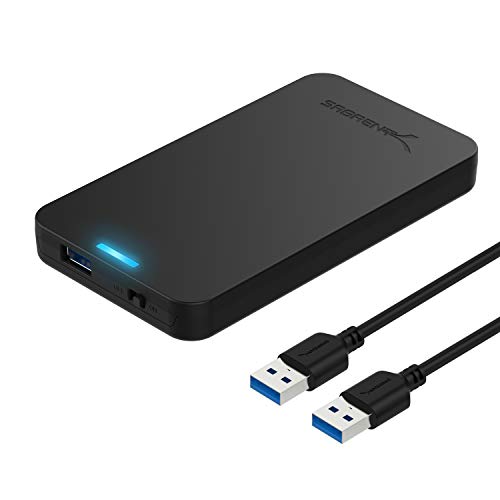
- Tool-free installation for one 2.5-inch SATA drive
- USB 3.0 transfer rates up to 5 Gbps with UASP
- Plug-and-play support for Windows and Mac
Best For: Single-drive laptop HDD or SSD backups
Best Multi-Drive Pick
Four-Bay RAID Backup Enclosure

- Eight RAID modes for flexible storage configurations
- Supports four 3.5-inch drives and up to 88TB
- USB 3.0 connectivity with aluminum cooling design
Best For: High-capacity desktop backups and RAID storage
Best Single-Bay 3.5-Inch Pick

- Supports one 3.5-inch SATA drive up to 18TB
- USB 3.0 with UASP and up to 5 Gbps
- Includes power adapter, stand, and installation tools
Best For: Powered backups of large desktop HDDs
Simple Single-Drive Pick
Tool-Free SATA Backup Enclosure
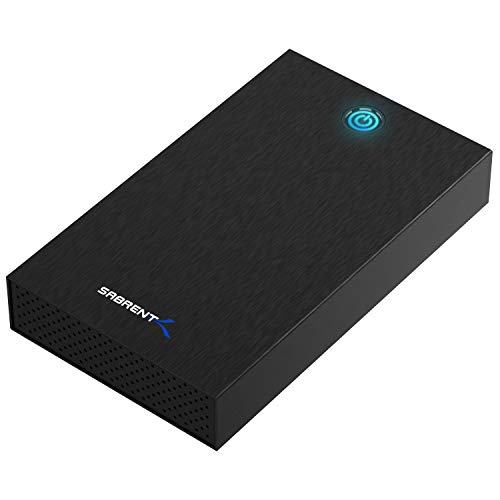
- Supports one 2.5-inch or 3.5-inch SATA drive
- Tool-free setup with USB 3.0 and UASP
- Includes 12V/2A power adapter
Best For: Single-drive SATA backups
High-Capacity Workstation Choice
Four-Bay USB-C Backup Enclosure

- Four SATA bays for 2.5-inch and 3.5-inch drives
- 10Gbps USB-C with independent bay switches
- Built-in temperature-controlled cooling fans
Best For: Multi-drive backup libraries and workstations
Flexible Dual-Bay Option
Tool-Free SATA Backup Enclosure

- Two bays support 2.5-inch and 3.5-inch SATA drives
- USB-A/C 3.0 with hot swapping
- Cooling fan and daisy-chain expansion support
Best For: Two-drive DAS backups and storage expansion
Best Single-Drive Value – ORICO 3.5-Inch USB 3.0 Enclosure
If you need a straightforward way to reuse a spare SATA drive, the ORICO 3588US3 is one of the more practical hard drive enclosures for backups. It supports a single 3.5-inch or 2.5-inch SATA HDD or SSD up to 20TB, includes a 12V/2A adapter for 3.5-inch drives, and offers USB 3.0 with UASP support.
Best For: Single-drive backups, desktop storage expansion, and users who want tool-free installation.
Pros:
- Supports 3.5-inch and 2.5-inch SATA drives up to 20TB.
- Tool-free, plug-and-play setup with no driver or reboot required.
- Includes power adapter, USB 3.0 cable, thermal pads, and a 12-month warranty.
Cons:
- It holds only one drive and does not provide RAID.
- A 3.5-inch drive requires the included external power adapter.
- USB 3.0 is slower than newer USB 3.2 Gen 2 enclosures.
The ORICO is a sensible pick when simplicity and broad SATA compatibility matter more than multi-drive redundancy or maximum interface speed. Its sleep mode, activity indicator, and internal anti-shock sponge add useful everyday conveniences.
Best for Mirrored Backups – TerraMaster D2-320 2-Bay RAID Enclosure
For backup plans that need drive redundancy, the TerraMaster D2-320 is a two-bay DAS enclosure with hardware RAID. It supports RAID 1 mirroring as well as RAID 0, JBOD, and Single modes, while USB 3.2 Gen 2 provides a rated connection speed of up to 10Gbps.
Best For: Users who want mirrored backups, multi-drive capacity, or flexible RAID configurations without setting up a NAS.
Pros:
- Supports RAID 1 for mirrored data, plus RAID 0, JBOD, and Single modes.
- Accepts two 3.5-inch or 2.5-inch SATA HDDs or SSDs, up to 22TB per drive.
- Tool-free trays, push-lock design, and temperature-controlled fan simplify operation.
Cons:
- Drives are not included.
- It is a DAS, not a network-attached storage device.
- RAID 1 reduces usable capacity because data is mirrored.
The D2-320 is the strongest choice here for backup resilience because RAID 1 can continue protecting data after a drive failure and supports automatic recovery after replacement. Choose it when you need more than a basic one-drive enclosure and can accept the added size and configuration.
Best Aluminum Cooling – ACASIS 6Gbps SATA Enclosure
The ACASIS enclosure combines a metal shell with support for both 3.5-inch and 2.5-inch SATA drives, making it a versatile option among hard drive enclosures for backups. Its USB 3.2 Gen 2 interface supports UASP, and the open-frame internal tray is designed to improve heat dissipation during extended use.
Best For: Large single-drive backups, sustained transfers, and users who prefer an aluminum enclosure with an independent power switch.
Pros:
- Supports drives up to 30TB and both 3.5-inch and 2.5-inch SATA formats.
- Aluminum shell and open-frame tray help manage heat.
- Includes USB-C-to-USB-C/A cable, 12V/2A adapter, and a 2-year warranty.
Cons:
- It supports one drive and has no RAID functionality.
- The stated maximum transfer rate depends on the host, drive, and connection.
- It requires external power for larger 3.5-inch drives.
ACASIS is a good fit for users moving large amounts of data to one high-capacity drive. Its switch and 10-minute sleep mode make it convenient for routine backup sessions, while the aluminum construction is useful for keeping temperatures under control.
Best Budget Dock-Style Pick – CLAVOOP 3.5-Inch USB 3.0 Case
The CLAVOOP 3.5-inch enclosure is a simple dock-style option for accessing or backing up a spare SATA drive. It supports 3.5-inch and 2.5-inch SATA HDDs and SSDs up to 20TB, uses USB 3.0 with UASP, and includes the 12V/2A adapter needed for 3.5-inch drives.
Best For: Basic drive access, data transfers, and budget-conscious users who want a lay-flat enclosure with broad operating-system compatibility.
Pros:
- Works with 3.5-inch and 2.5-inch SATA I/II/III drives up to 20TB.
- Tool-free plug-and-play operation with tested read speeds up to 336MB/s.
- Ventilation holes, non-slip feet, shock-proof sponges, and auto-sleep support everyday use.
Cons:
- It has no RAID and supports only one drive at a time.
- Not compatible with IDE, mSATA, or M.2 drives.
- No warranty is specified in the supplied details.
This CLAVOOP model is best when you want an uncomplicated way to connect a compatible SATA drive for occasional backups or recovery work. Confirm the drive interface before buying, since newer M.2 and mSATA storage will not fit.
Best Compact Pick – Tool-Free 2.5-Inch SATA Enclosure
For straightforward upgrades or file copies, the SABRENT EC-UASP is a compact choice among hard drive enclosures for backups. Its tool-free design accepts one 2.5-inch SATA HDD or SSD, connects over USB 3.0 at up to 5 Gbps, and supports plug-and-play use without extra drivers.
Best For: Users backing up or reusing a 2.5-inch notebook drive or SATA SSD.
Pros:
- Tool-free installation makes drive changes quick.
- Supports 2.5-inch SATA and SATA II hard drives plus SATA III SSDs with UASP.
- USB 3.0 offers transfer rates up to 5 Gbps and remains compatible with USB 2.0 and 1.1.
- Supports Windows and Mac systems with hot-swappable, plug-and-play operation.
Cons:
- Only supports one 2.5-inch drive.
- Plastic construction may feel less substantial than an aluminum enclosure.
- It is not designed for 3.5-inch desktop drives.
This is a practical, lightweight enclosure for single-drive backups, especially when the source drive is from a laptop. Its small size and simple installation keep the setup uncomplicated.
Best Multi-Drive Pick – Four-Bay RAID Backup Enclosure
The ORICO 9848RU3 is built for larger backup setups that need multiple 3.5-inch drives. It supports four SATA disks, eight RAID modes, up to 88TB of total capacity, and USB 3.0 connectivity, making it suited to centralized storage and more structured data protection.
Best For: Users who need four-drive storage expansion, RAID flexibility, and high-capacity backups.
Pros:
- Offers RAID 0, 1, 3, 5, 10, JBOD, CLONE, and CLEAR modes.
- Supports four 3.5-inch SATA drives, up to 22TB per disk and 88TB total.
- USB 3.0 transfer performance is rated up to 235 MB/s.
- Aluminum housing, an 80mm cooling fan, vents, and a built-in 150W power supply support multi-disk operation.
Cons:
- Its four-bay design is larger and more involved than a single-drive enclosure.
- It requires a power connection and is intended for desktop use.
- RAID configuration adds setup decisions compared with a basic external enclosure.
Choose this enclosure when capacity and drive redundancy matter more than portability. The broad RAID selection provides flexibility, while active cooling and the built-in power supply are useful for sustained multi-drive use.
Best Single-Bay 3.5-Inch Pick – Aluminum SATA Enclosure
The GODO 3.5-inch enclosure is a sensible middle ground for backing up a full-size desktop HDD without moving to a multi-bay RAID system. It supports SATA I, II, and III drives, includes a 12V/2A power adapter, and uses USB 3.0 with UASP for rated speeds up to 5 Gbps.
Best For: Desktop HDD backups requiring a powered, single-drive enclosure with cooling and stable connectivity.
Pros:
- Supports one 3.5-inch SATA HDD or SSD up to 18TB.
- USB 3.0 with UASP and TRIM is designed for faster transfers.
- Aluminum housing helps with heat dissipation and includes an LED activity indicator.
- Includes a 12V/2A power adapter, vertical stand, screws, screwdriver, and USB cable.
Cons:
- Supports only one drive and does not offer RAID modes.
- The 3.5-inch format and separate power adapter reduce portability compared with a 2.5-inch enclosure.
- Drive installation uses screws rather than a tool-free mechanism.
For a single large desktop drive, the GODO combines useful capacity support with an aluminum body, external power, and a stand for desktop placement. It is a practical choice when you want more stability than a small bus-powered enclosure provides.
Simple Single-Drive Pick – Tool-Free SATA Backup Enclosure
For straightforward backups, the SABRENT EC-KSL3 is a compact option among hard drive enclosures for backups. It accepts one 2.5-inch or 3.5-inch SATA HDD or SSD and connects through USB 3.0 with UASP. Setup is tool-free, but the included 12V/2A adapter means it needs a wall outlet.
Best For: Users who need a simple enclosure for one SATA drive and do not require RAID, NAS, or USB-C connectivity.
Pros:
- Supports both 2.5-inch and 3.5-inch SATA HDDs and SSDs.
- Tool-free design makes drive swaps quick.
- Aluminum shell, shock-absorbing tray, UASP, and plug-and-play support for Windows, macOS, and Linux.
Cons:
- Not compatible with SAS, M.2, NVMe, or IDE/PATA drives.
- Requires a wall outlet and uses USB-A; a USB-C adapter is not included.
- Some 4TB-plus 3.5-inch drives with non-standard PCB height may not seat correctly.
This is a practical, space-conscious choice for one compatible SATA drive. Verify the drive dimensions and available ports before buying, especially if your computer has only USB-C connections.
High-Capacity Workstation Choice – Four-Bay USB-C Backup Enclosure
The WAVLINK four-bay model is built for users managing several drives and large backup libraries. Its four SATA bays support 2.5-inch and 3.5-inch drives, with USB 3.2 Type-C speeds up to 10Gbps, independent power switches, and temperature-controlled fans. It also adds HDMI output, though video requires a compatible host USB-C port.
Best For: Power users, media workers, and households that need multiple SATA drives in one high-capacity enclosure.
Pros:
- Four bays support up to four SATA drives, with stated capacity up to 4x32TB.
- USB 3.2 Type-C supports up to 10Gbps transfer rates.
- Aluminum construction, automatic cooling fans, independent bay switches, and HDMI output add versatility.
Cons:
- 2.5-inch drives require separate 2.5-to-3.5-inch mounting brackets.
- HDMI requires a host USB-C port with video output and a USB-C-to-C cable.
- The larger four-bay enclosure takes more desk space than a single-drive model.
Choose this enclosure when expandable, multi-drive storage matters more than minimal size. Its cooling and independent switches suit active workflows, while the HDMI feature is useful only with compatible host hardware.
Flexible Dual-Bay Option – Tool-Free SATA Backup Enclosure
The CENMATE two-bay enclosure balances capacity and convenience for users who want more than one drive without moving to a four-bay system. It supports 2.5-inch and 3.5-inch SATA HDDs and SSDs, offers USB-A and USB-C 3.0 connectivity, and includes hot swapping, tool-free installation, and a cooling fan.
Best For: Home users and small businesses seeking a dual-drive DAS enclosure for expanded SATA storage and backups.
Pros:
- Holds two 2.5-inch or 3.5-inch SATA drives, with up to 20TB stated per drive.
- Tool-free installation and hot swapping simplify drive management.
- Includes USB-A/C 3.0 connectivity, aluminum construction, and daisy-chain expansion support.
Cons:
- It is DAS rather than RAID or NAS, so those features are not included.
- The cooling fan produces approximately 40–50 decibels and may be noticeable.
- USB 3.0 offers up to 5Gbps, below the speed of newer 10Gbps enclosures.
This model is a sensible middle ground for adding two SATA drives to a desktop or laptop setup. Consider it if tool-free access and expansion are priorities, but avoid it if you specifically need RAID, NAS functionality, or quieter operation.
How We Picked the Best Hard Drive Enclosures for Backups
We compared these enclosures by drive compatibility, connection speed, capacity, cooling, installation convenience, and expansion potential. We also considered whether each model is better suited to a portable single-drive backup, a desktop archive, or a multi-disk RAID setup.
Because enclosure specifications can vary by drive, computer, operating system, and RAID configuration, verify the manufacturer’s current limits before buying. An enclosure does not replace a complete backup strategy: important files should follow the 3-2-1 rule, with multiple copies stored on different media and at least one copy kept separately.
Quick Comparison
| Type | Best For | Advantages | Trade-Offs |
|---|---|---|---|
| Single-drive 2.5-inch | Portable SSD or laptop-drive backups | Compact, usually bus-powered, easy to carry | Limited to one drive and lower capacity |
| Single-drive 3.5-inch | Desktop HDD backups | Works with larger, affordable hard drives | Requires external power and takes more space |
| Two-bay | Flexible storage or basic RAID | More capacity, redundancy, and drive flexibility | Higher cost and more configuration |
| Four-bay | Large archives and growing data collections | High capacity, RAID options, and expansion | Larger footprint and greater power use |
Key Buying Factors for Hard Drive Enclosures for Backups
Drive Size and Interface
Check whether the enclosure accepts 2.5-inch drives, 3.5-inch drives, or both. Most models support SATA HDDs and SSDs, but older IDE or proprietary drives need a different adapter. A 3.5-inch HDD enclosure generally needs its own power adapter, while many 2.5-inch models can draw power through USB.
USB Speed and Connector
USB 3.0 is adequate for many hard-drive backups, while USB 3.2 or USB-C can provide more headroom for SSDs and fast transfers. The computer, cable, and drive must all support the faster standard, and real-world HDD performance will usually remain below the interface’s advertised maximum.
Cooling and Durability
Aluminum shells can help dissipate heat, but ventilation and fans matter more for continuously active multi-drive enclosures. For large backup jobs, look for stable airflow, temperature-controlled cooling, and a sturdy drive-mounting system.
RAID, Capacity, and Data Safety
Multi-bay models may support RAID modes such as mirroring or striping. RAID can improve availability or performance, but it is not a substitute for an independent backup. Confirm supported RAID levels, maximum drive capacity, rebuild behavior, and whether the enclosure requires proprietary software.
Who Should Buy Which Hard Drive Enclosures for Backups?
Choose a compact 2.5-inch enclosure if you need portable backups from a laptop SSD or small SATA drive. A powered 3.5-inch enclosure is the better choice for inexpensive, high-capacity desktop HDD storage. Select a two-bay model when you want added capacity or mirrored storage without committing to a larger array.
For photographers, video editors, home servers, and anyone managing several terabytes, a four-bay enclosure offers more room to grow. Prioritize cooling, a reliable power supply, and the RAID features you will actually use. If simplicity matters most, a single-drive enclosure is often the easiest and least expensive route to a useful local backup.
